Gorilla Trekking Guide: Permits, Costs, Rules & What to Expect
Last updated: 11 November 2026
Standing a few metres from a family of wild mountain gorillas is one of the most powerful wildlife encounters on Earth. But before you lace up your boots, there are permits to book, rules to know and a few practical decisions to make. This guide covers how gorilla trekking actually works: what permits cost, what happens on the day, how fit you need to be and what to pack.
Gorilla trekking at a glance
- Where: Uganda (Bwindi Impenetrable & Mgahinga) and Rwanda (Volcanoes National Park)
- Permit cost (foreign adults): US$800 in Uganda (US$600 in April, May & November); US$1,500 in Rwanda
- Time with the gorillas: 1 hour, in a group of no more than 8 trekkers
- Minimum age: 15 years
- Trek length: from 1 to 6+ hours, depending on where the gorillas are that day
- Best time: the drier months, December to February and June to September
In this guide: Why go · Where to go · Permits & costs · Trek day · Rules & etiquette · Fitness · Best time · Where to stay · What to pack · Safety · Is it worth it? · FAQs
Why go gorilla trekking?
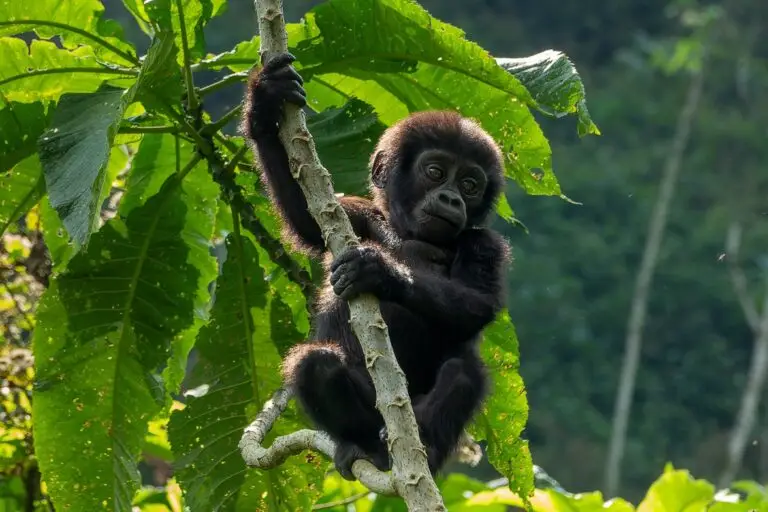
Mountain gorillas are one of conservation’s great comeback stories. In the early 1980s only around 250 were left in the Virunga Mountains. The most recent census counted 1,063 mountain gorillas in the wild, and more than half of them live in Uganda’s Bwindi Impenetrable National Park and Mgahinga Gorilla National Park.
Gorilla tourism is a big reason for that recovery. Every permit helps fund rangers, anti-poaching patrols, veterinary care and the communities that live alongside the parks. When you trek, you are paying directly for the protection of the animals you came to see.
There are two species of gorilla. Eastern gorillas include the mountain gorillas you trek in Uganda and Rwanda, plus the eastern lowland (Grauer’s) gorilla found only in the DRC. Western gorillas include the western lowland gorilla of Congo, Gabon and Cameroon, and the rare Cross River gorilla. Learn more in our history of gorilla trekking.
Where can you go gorilla trekking?
Mountain gorillas live in only two places: the Virunga Mountains (shared by Rwanda, Uganda and the DRC) and Uganda’s Bwindi Impenetrable Forest. In practice, that means two countries to choose from:
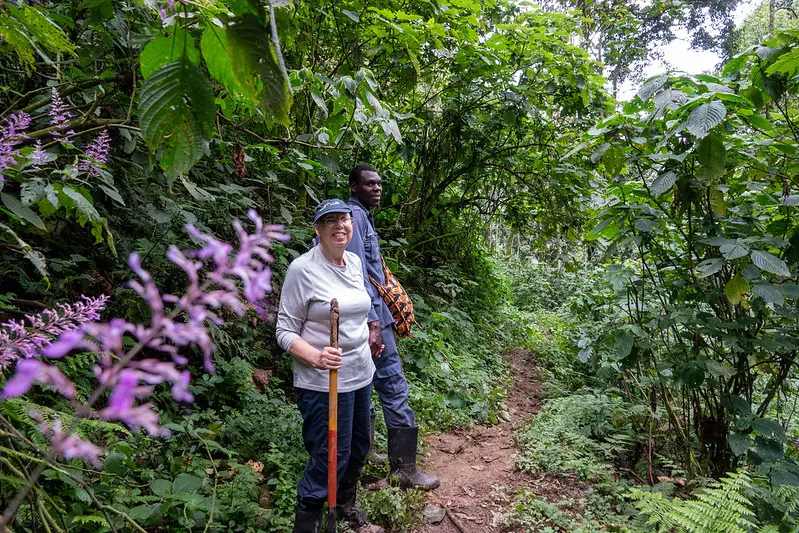
- Uganda has more than 25 habituated gorilla families across Bwindi’s four sectors (Buhoma, Ruhija, Rushaga and Nkuringo) and one family in Mgahinga. Permits cost about half of Rwanda’s, and it’s easy to combine with chimps and a classic safari. Bwindi’s terrain is steep and dense, so treks can be demanding.
- Rwanda treks in Volcanoes National Park, about 2.5–3 hours’ drive from Kigali. It suits shorter trips and travellers who want high-end lodges, but permits are the most expensive in Africa.
- DRC: mountain gorilla trekking in Virunga National Park is currently closed to visitors for security reasons. We don’t recommend planning around it.
Comparing Uganda and Rwanda in detail? Read the best places to see gorillas in the wild, or see Bwindi vs Mgahinga if you’ve already chosen Uganda.
Gorilla trekking permits: costs and how to book
Your gorilla permit is the single biggest cost of the trip. It covers the park entry, a ranger-guided trek and one hour with a habituated gorilla family. It does not include transport, accommodation, porters or tips.
| Permit (foreign non-resident adult) | Price per person | Notes |
|---|---|---|
| Uganda gorilla trekking (Bwindi & Mgahinga) | US$800 | US$600 in the low-season months of April, May and November |
| Uganda gorilla habituation experience (Bwindi) | US$1,500 | Up to 4 hours with a family still being habituated |
| Rwanda gorilla trekking (Volcanoes NP) | US$1,500 | A 30% discount is sometimes offered November–May when combined with stays in Akagera or Nyungwe |
| DRC (Virunga) | – | Currently closed to visitors |
Permit tariffs change. We confirm the current rate for your travel dates before booking.
How to book: permits are sold by the Uganda Wildlife Authority and the Rwanda Development Board, and most travellers book through a tour operator who can lock in dates around lodges and transfers. Each gorilla family can be visited by only 8 people a day, so permits for June to September and the Christmas period can sell out 6–12 months ahead. Book as soon as your dates are set.
Should you buy two permits? Sightings are very reliable, so one permit is enough for most people. If seeing gorillas is the whole point of your trip, a second day gives you a back-up and a completely different experience with another family.
What to expect on gorilla trekking day
1. Early briefing. You’ll arrive at the park headquarters for your sector at around 7am for check-in and a briefing from the rangers. Bring your passport (it must match the name on your permit). Visitors are split into groups of up to 8 and assigned a gorilla family, and anyone who is visibly unwell won’t be allowed to trek.
2. Meet your porter. Porters wait at the trailhead and charge around US$15–20. We recommend hiring one even if you’re young and fit. They carry your daypack, help you up steep, muddy banks and earn an important income from the park.
3. The trek. Trackers set out at dawn to find where your family nested the night before and radio the location to your ranger. The walk in can take anywhere from under an hour to 6 hours or more, often off-trail through thick vegetation. Your guide controls the pace and there are plenty of rest stops.
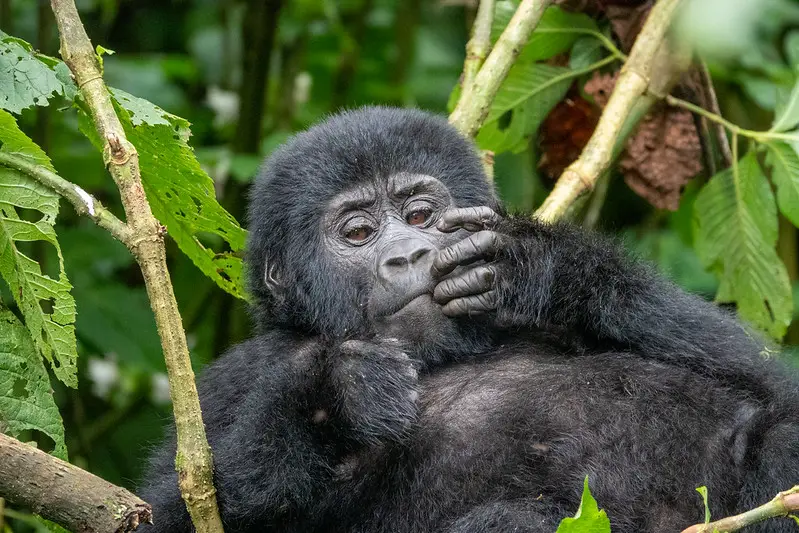
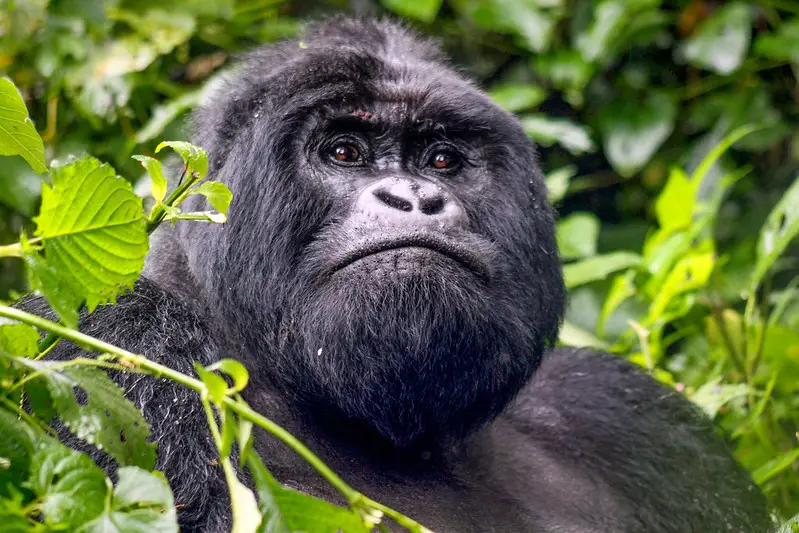
4. Your hour with the gorillas. About 100m from the family you’ll leave your bags, walking sticks and food with your porter. Then you have one hour, watching the silverback, mothers and young feed, groom and play. The hour starts when you reach the gorillas, not when you leave the trailhead.
5. The walk out. You’ll head back the way you came. Most treks finish by early-to-mid afternoon, and many parks give you a certificate.
Gorilla trekking rules and etiquette
Mountain gorillas share about 98% of our DNA, which means they can catch our colds, flu and other infections. Most of the rules exist to protect them, and the rest keep you safe. Your ranger will repeat them at the briefing.
- Keep at least 7 metres (about 22 feet) away. If a gorilla moves towards you, stay still or step back slowly as your ranger directs.
- Don’t trek if you’re sick. A cold, cough or fever means you won’t be allowed in. If you sneeze or cough, turn away and cover your mouth.
- Stay with your ranger and group at all times, and follow every instruction they give.
- Keep your voice low and avoid sudden movements or pointing.
- No flash photography, and avoid staring a silverback in the eye.
- No eating, drinking or smoking near the gorillas, and never leave food or rubbish behind.
- Keep valuables secure. Carry cash, cards, passport and camera on you in a zipped pocket.
- Respect local culture. Ask before photographing people in the villages around the parks.
Put the camera down. A good rule of thumb is to take photos for the first 10–15 minutes, then spend the rest of your hour just watching.
Tipping guide. Tipping is customary in East Africa. As a guide (amounts in US$):
| Who | Suggested tip |
|---|---|
| Ranger guide | US$30–40 per ranger, shared across the group (around US$5 each) |
| Trackers | US$10–20 per tracker, shared across the group |
| Your porter | US$10–20 from you, on top of the porter fee |
Hand each tip to the person directly rather than giving the total to the head ranger. For more, see our ultimate African tipping guide.
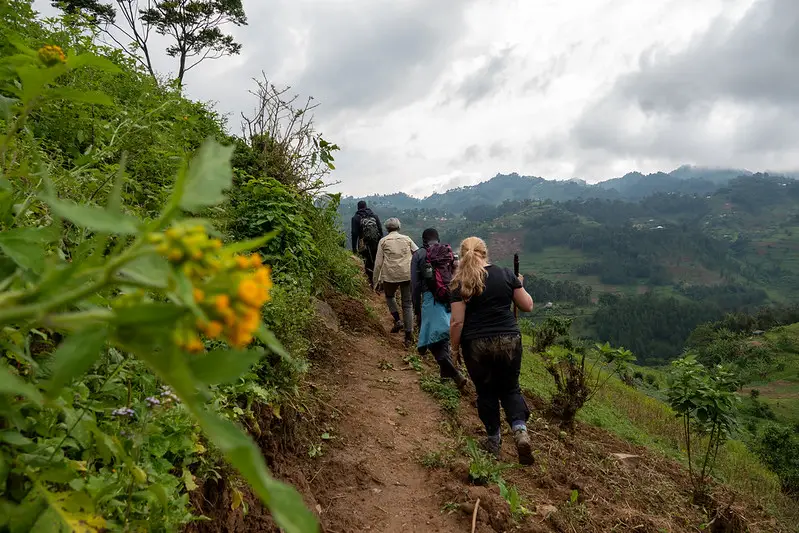
How fit do you need to be for gorilla trekking?
You don’t need to be an athlete, but you should be comfortable walking for several hours on steep, muddy and uneven ground, at altitudes of roughly 1,200–3,000 metres. If you can manage a 3–4 hour bushwalk with hills, you’ll be fine.
- Bwindi (Uganda) is the most demanding. The forest is dense, the slopes are steep and some sectors (Nkuringo and Ruhija) are tougher than others.
- Mgahinga (Uganda) is a little more open, on the slopes of the Virunga volcanoes, with one gorilla family.
- Volcanoes National Park (Rwanda) starts with a walk through farmland to the park edge, then bamboo and open forest. It’s often a little easier, although some families range high on the volcanoes.
Older or less mobile? Tell us when you book. Rangers can usually assign you a family that’s closer to the trailhead, although the gorillas decide where they’ll be on the day. A porter makes a big difference, and in Uganda and Rwanda you can hire a stretcher-style “sedan chair” carried by a team of porters if you’re unable to walk the distance.
How to prepare: in the months before, do regular hill walks or stair climbs, break in your hiking boots and practise walking with a daypack.
Best time to go gorilla trekking
Gorillas don’t migrate, so you can trek all year. The difference is the weather and the trails:
- December to February and June to September are the drier months. Trails are less slippery, but these are the busiest times, so book permits and lodges early.
- March to May and October to November are wetter. Expect mud and rain, but also fewer people, greener forests and, in Uganda, discounted US$600 permits in April, May and November.
It rains in the rainforest at any time of year, so pack a rain jacket whenever you go. For a month-by-month breakdown, see the best time of year for a gorilla trek.
Where to stay for gorilla trekking
Treks start early, so stay as close as possible to the trailhead for your permit. In Bwindi that means choosing a lodge in the same sector as your gorilla family, because the sectors are hours apart by road.
There are options for every budget, from simple lodges at around US$100 per person per night to luxury camps at US$1,500+ (Rwanda’s top lodges especially). After a muddy day in the forest, a hot shower, a fireplace and a good dinner make a real difference. See our picks in where to stay on your gorilla trek.
What to pack and wear for gorilla trekking
The essentials:
- Broken-in, waterproof hiking boots with good grip
- Long hiking pants tucked into long socks (to keep out safari ants) and a long-sleeved shirt
- A breathable rain jacket, whatever the season
- Garden gloves for grabbing vines and nettles
- A small daypack with 2–3 litres of water, snacks and insect repellent
- Your passport, permit and some small US$ notes for tips
Leave trekking poles at home; your ranger will give you a sturdy wooden walking stick. For the full list, see what to pack and wear for gorilla trekking. If you’re travelling with us, ask about discounts from our gear partners.
Is gorilla trekking safe?
Yes, when you follow your ranger’s lead. The families you visit are habituated: they’ve spent years getting used to calm human visitors, and they’re watched every day. Bluff charges and pushes do happen occasionally, but your ranger reads the gorillas’ behaviour and tells you exactly what to do. The bigger risks are a slip on a muddy slope or a twisted ankle. For more, read is gorilla trekking safe?
Travel advice for Uganda and Rwanda changes, especially for areas near the DRC border where both gorilla parks sit. Check your government’s latest advice before you book and again before you fly (Australians can use Smartraveller), and see how safe is it to visit East Africa.
Women travellers: our woman’s guide to gorilla trekking covers periods, bush toilets and cultural considerations.
Families: the minimum age is 15 in both Uganda and Rwanda, and it’s strictly enforced. See kids on gorilla trekking for what younger children can do while you trek.
Is gorilla trekking worth it?
It’s expensive, and the hike can be hard work. Ask almost anyone who has done it, though, and they’ll tell you it’s the best hour of their travelling life. You’ll watch a 200kg silverback strip bamboo a few metres away, and see infants tumble over their mothers. Your permit fee also directly funds the protection of an endangered species and the communities around the parks.
To get the most from the trip, give yourself time. Allow at least 3–5 days for gorillas alone, or a week or more to add chimp trekking, golden monkeys or a classic safari. See our ideas for things to do before or after your gorilla trek, or browse our gorilla trekking tours in Uganda and Rwanda.
Gorilla trekking FAQs
How much is a gorilla trekking permit?
For foreign adults, US$800 in Uganda (US$600 in April, May and November) and US$1,500 in Rwanda. Uganda’s 4-hour gorilla habituation experience costs US$1,500.
Will I definitely see gorillas?
Sightings aren’t guaranteed, but they’re extremely reliable. Trackers locate your family before you set off, and success rates are well over 95%.
How close can you get to the gorillas?
The rule is 7 metres. Young gorillas are curious, though, and sometimes come closer. If they do, your ranger will guide you back.
How long do you spend with the gorillas?
One hour on a standard trek, or up to four hours on Uganda’s habituation experience.
Do I have to hire a porter?
It’s optional, but we strongly recommend it. For around US$15–20 you get help on the steepest sections and support a local family.
What’s the minimum age for gorilla trekking?
15 years old in both Uganda and Rwanda.
Can I trek if I have a cold?
No. Gorillas are highly vulnerable to human illnesses, so anyone who is unwell will be turned away. Travel insurance that covers missed activities is worth having.
How far in advance should I book a gorilla permit?
As soon as your dates are fixed. For June to September and the Christmas holidays, 6–12 months ahead is sensible.