Safari Vehicle Types Explained: Which Vehicle Is Right for Your African Safari?
The engine falls silent. Dust drifts across the track. Fifty metres ahead, a lioness lifts her head and looks straight at you. For a moment, nobody in the vehicle says a word.
It is the kind of encounter you will remember for years.
When planning an African safari, you probably spend most of your time thinking about the animals, national parks and beautiful lodges. But there is another decision worth getting right: the vehicle you will spend hours travelling in.
Different safari vehicle types offer different advantages, from the affordability of a safari van to the comfort of an enclosed 4×4 and the open-air experience of a lodge-based game drive.
Your destination, budget, group size and photography interests all play a part in deciding which one is right for you.
Here is how the main options compare, what they cost and what to consider before booking your African safari.
Why Does Your Safari Vehicle Matter?
A great safari depends on several things working together. Your guide’s knowledge, the destination, the timing of your game drives and a little luck all influence what you see.
Your vehicle determines how comfortably you travel, how easily you view wildlife and how much flexibility you have during the day.
Consider the difference between spending several hours travelling between national parks in a dusty, enclosed vehicle and enjoying a morning game drive in an open-sided 4×4 at a private reserve.
Both can deliver memorable wildlife encounters, but they offer different experiences.
When comparing vehicles, think about:
Comfort: How much legroom, ventilation and protection from dust or rain will you have?
Wildlife viewing: Can everyone see clearly, or will some seats have restricted views?
Photography: Can you move to a better viewing position or photograph through an open side?
Terrain: Is the vehicle suitable for the roads and tracks on your itinerary?
Flexibility: Will you share game drives with other guests, or have a private vehicle and guide?
Researching different safari vehicle types can greatly influence your safari experience.With those considerations in mind, let’s look at the three main safari vehicle types you are likely to encounter.
Safari Vehicle Types
Understanding the key safari vehicle types will help you choose the right fit for your adventure.
Each of the primary safari vehicle types has its own set of advantages for wildlife viewing.
1. Safari Mini Van: The Budget-Friendly Option
From US$250 per day.
A safari mini van is a popular choice for budget-conscious travellers, particularly on road-based safaris in Kenya and Uganda.
These vehicles are typically modified for wildlife viewing, with a pop-up roof that allows passengers to stand and look out over the surrounding landscape. Many are four-wheel drive, although specifications vary between operators.
Advantages
Generally more affordable than a dedicated safari 4×4.
Pop-up roof provides an elevated wildlife-viewing position.
Suitable for many established road-based safari itineraries.
A practical option for travellers who want to experience a safari without stretching their budget.
Things to consider
Some vans offer less ground clearance and off-road capability than a purpose-built 4×4.
Suspension, seating comfort and luggage space vary by vehicle.
A fully occupied vehicle can feel cramped on long journeys.
Best for: Budget-conscious travellers, shorter safaris and itineraries where the vehicle is suitable for the terrain.
A safari van can be an excellent way to experience Africa’s wildlife. The key is choosing a well-maintained vehicle and confirming that its seating arrangement gives everyone a good view.
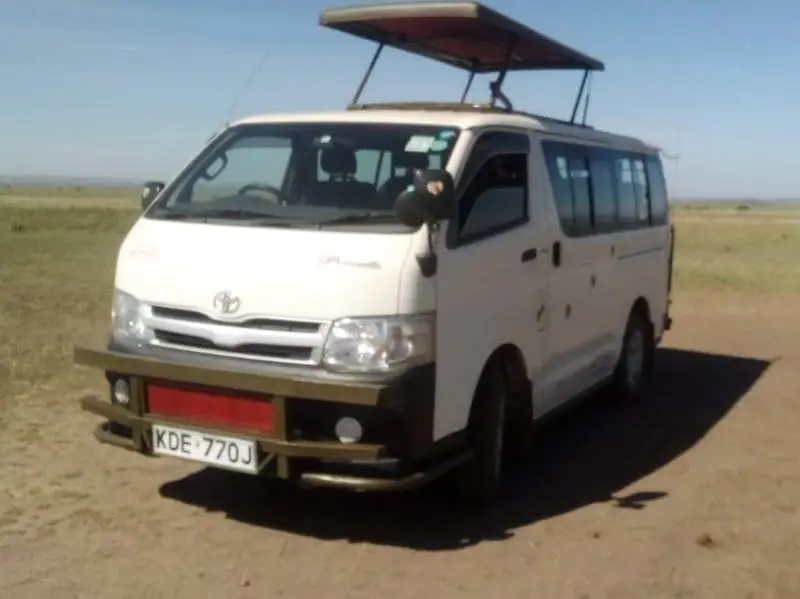
Opting for a safari mini van showcases one of the budget-friendly safari vehicle types.
2. Pop-Top 4×4 Safari Jeep: The Versatile All-Rounder
From US$350 per day.
If you picture a classic East African safari vehicle, this is probably what comes to mind.
Usually based on a modified Toyota Land Cruiser or a similar 4×4, the pop-top safari jeep combines an enclosed cabin with a roof section that lifts for wildlife viewing.
When you are travelling between parks, the enclosed sides help protect you from dust, wind and rain. Once you reach a wildlife-viewing area, you can raise the roof and stand to photograph animals or scan the plains.
Many purpose-built vehicles also feature large windows, spacious seating arrangements and practical extras such as charging points or a cooler, depending on the operator.
Advantages
A good balance of comfort and wildlife visibility.
Protection from dust and changing weather during road transfers.
Four-wheel-drive capability on suitable models.
Convenient for itineraries covering multiple parks and destinations.
Often a practical choice for families and private groups.
Things to consider
You may have less unobstructed side access for photography than in an open-sided vehicle.
Standing through the roof opening may be difficult for some travellers.
Comfort and visibility depend on the vehicle’s design and passenger numbers.
Best for: Multi-park safaris in Kenya and Tanzania, families, private groups and travellers who want a versatile vehicle for both road journeys and game drives.
For many of our East African itineraries, this is an excellent all-round choice because it handles the different demands of travelling between destinations while still providing a rewarding wildlife-viewing experience.
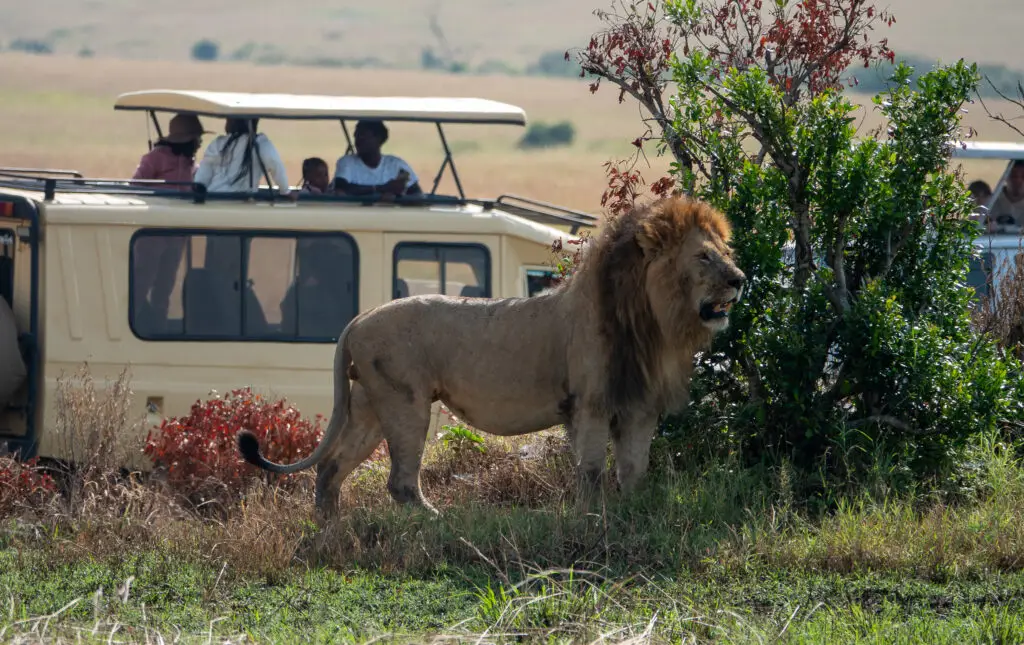
The pop-top 4×4 is one of the most popular safari vehicle types, known for its versatility.
3. Open-Sided 4×4 Safari Jeep: The Immersive Experience
From US$500 per day.
Open-sided safari vehicles offer a different way to experience the bush.
Common at many lodges and private reserves, particularly in Southern Africa, these vehicles are designed primarily for game drives rather than long road transfers.
With open sides and raised seating, you have a broad view of the surrounding landscape. You can hear birds calling, feel the morning air and enjoy unobstructed views when wildlife appears alongside the vehicle.
Many vehicles have a canopy for shade, and some feature removable or roll-down covers for changing weather.
Advantages
Excellent side visibility and an immersive outdoor experience.
Fewer window frames to obstruct wildlife photography.
Well suited to lodge-based game drives.
Often used in private reserves that offer specialist activities such as night drives, where permitted.
Things to consider
You are more exposed to wind, dust, cold mornings and rain.
These vehicles are not always practical for long transfers on public roads.
Seating arrangements and passenger numbers vary considerably.
Boarding and exiting can still be challenging for travellers with limited mobility, so check the specific vehicle in advance.
Best for: Lodge-based safaris, private reserves, wildlife photographers and travellers who want a more open-air experience.
One important point: open-sided vehicles do not automatically guarantee better wildlife sightings. Your guide’s experience, the location and the behaviour of the animals remain central to the experience.
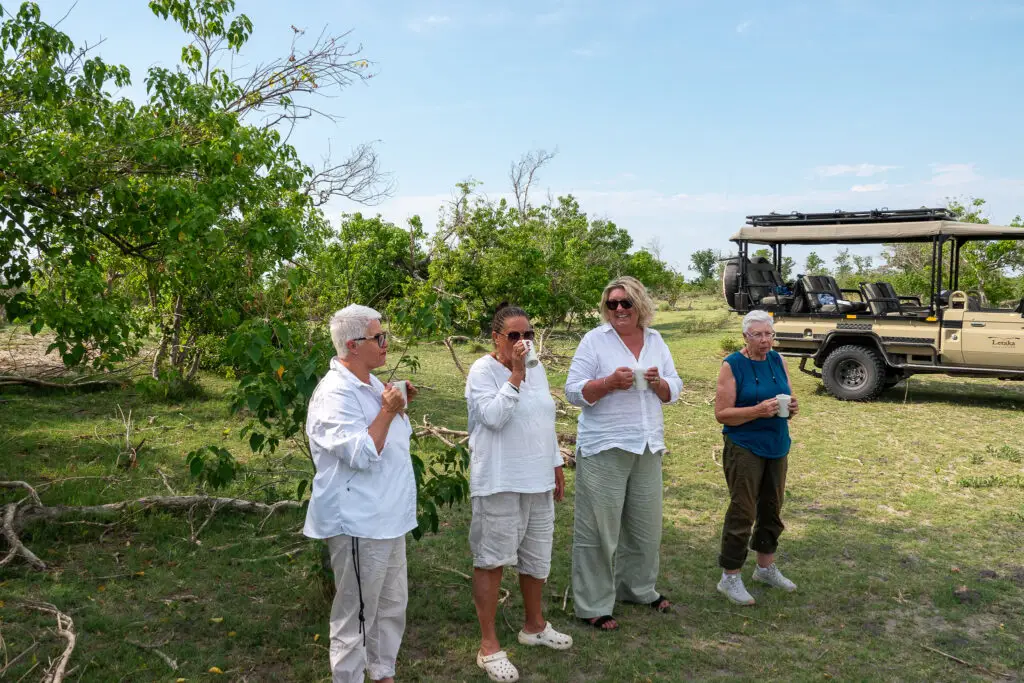
Open-sided 4×4 safari vehicles represent another of the popular safari vehicle types.
Safari Vehicle Comparison: Which One Should You Choose?
| Feature | Safari minivan | Pop-top 4×4 | Open-sided 4×4 |
|---|---|---|---|
| Typical price level | Budget | Mid-range to luxury | Mid-range to luxury |
| Weather protection | Generally good when enclosed | Good | More limited |
| Wildlife viewing | Pop-up roof | Pop-up roof and windows | Open sides |
| Photography | Good, depending on seating | Good, with elevated viewing | Excellent side access |
| Long road transfers | Suitable on appropriate routes | Very suitable | Depends on the vehicle and itinerary |
| Best suited to | Budget road safaris | Multi-park safaris | Lodge-based game drives |
These are general comparisons, not guarantees. A well-maintained vehicle with a knowledgeable guide and sensible passenger numbers can make a bigger difference than the vehicle label alone.
When exploring various safari vehicle types, consider your comfort and viewing preferences.
Lodge-Run vs Private Game Drives
Choosing a safari vehicle is only part of the decision. You also need to consider who operates the game drives and whether you will share the vehicle with other travellers.
Lodge-Run Game Drives
Many lodges and camps organise morning and afternoon game drives using their own vehicles and guides.
A typical schedule might involve an early morning departure around sunrise, followed by an afternoon drive when temperatures begin to cool. Exact timings depend on the destination, season and lodge.
Advantages
Convenient when game drives are included in your accommodation package.
Guides may have extensive experience in the surrounding reserve.
You do not need to organise separate transport for every activity.
Some lodges offer specialist experiences, including night drives where permitted.
Things to consider
Game drives may be shared with other guests.
Departure times and routes may follow the lodge’s schedule.
Private vehicles may carry an additional charge.
Some lodges require guests to use their own vehicles and guides.
A lodge-run safari is an excellent option if you want a relaxed stay with game drives organised around your accommodation.
Private Game Drives
A private game drive gives your group a dedicated vehicle and guide.
In East Africa, this often means travelling in a private pop-top 4×4 with a guide who accompanies you throughout the itinerary. At some lodges and private reserves, you can also arrange a private open-sided vehicle.
Advantages
You travel only with your own group.
You have more flexibility over how long to spend at sightings, within park and reserve rules.
Your guide can tailor the experience to your interests, whether that means wildlife photography, birds or particular species.
You can often choose between morning and afternoon drives or a full-day excursion where permitted.
Things to consider
A private vehicle may increase the total cost of your safari.
You need to confirm whether the quotation includes the vehicle, guide, fuel, park fees and other activities.
Private access does not mean unrestricted off-road driving or permission to approach animals closely.
Private game drives are particularly attractive for families, small groups, photographers and travellers who value flexibility.
Neither arrangement is automatically better. The right choice depends on your budget, itinerary and preferred style of travel.

How to Choose the Right Safari Vehicle for Your Trip
Evaluating the right safari vehicle types ensures a memorable wildlife experience.
Before booking, ask yourself five questions.
1. Where are you going?
A multi-park road safari in Kenya or Tanzania has different transport needs from a lodge-based stay in a private reserve in Botswana or South Africa. Choose a vehicle suited to the actual itinerary.
2. What is your budget?
A safari van can offer excellent value, while a dedicated 4×4 may be worth the extra cost on longer or rougher routes.
3. How many people are travelling?
Check the actual passenger capacity and how many guests will share the vehicle. A vehicle advertised as seating seven does not necessarily provide the same comfort or photography opportunities as one carrying four or six guests.
4. Are you interested in photography?
If photography is a priority, ask about window access, roof design, seating arrangements and whether the vehicle has camera supports or other useful equipment.
5. How much flexibility do you want?
If you prefer to follow your own interests and spend longer at wildlife sightings, a private vehicle may suit you better than a shared game drive.
The right vehicle is the one that fits your destination, expectations and budget, not necessarily the most expensive one available.
When considering your options, understanding the various safari vehicle types is crucial for enhancing your experience.
Frequently Asked Questions About Safari Vehicle Types
Familiarizing yourself with the various safari vehicle types is essential for informed travel decisions.
What is the best type of safari vehicle?
There is no single best option for every safari. A pop-top 4×4 is a versatile choice for multi-park trips in East Africa, a safari van can suit budget-conscious travellers, and an open-sided 4×4 offers an immersive experience on lodge-based game drives.
What is the difference between an open-sided and a pop-top safari jeep?
A pop-top safari jeep has an enclosed cabin with a roof section that lifts for wildlife viewing. An open-sided vehicle has open sides, giving passengers more direct views of the surrounding landscape. The best option depends on your itinerary, weather preferences and photography needs.
How many people fit in a safari vehicle?
Capacity varies by model and operator. Some safari vans and pop-top 4x4s accommodate up to seven guests plus a guide, while many lodge-based open-sided vehicles carry smaller groups. Always confirm the passenger limit and expected occupancy before booking.
Are safari vans safe for game drives?
A properly maintained safari van that is suitable for the route can be a good option. Confirm whether it has four-wheel drive where required, appropriate ground clearance, suitable safety equipment and a configuration designed for wildlife viewing.
Are open-sided safari vehicles used in East Africa?
Yes. Although enclosed pop-top 4x4s are common on road-based safaris in Kenya and Tanzania, open-sided vehicles are also used at some lodges and private conservancies. Availability depends on the destination and operator.
Is a private game drive worth it?
It can be, particularly for families, small groups and photographers who value flexibility. You have a dedicated vehicle and guide, although the additional cost should be weighed against your budget and the benefits of a shared experience.
Which safari vehicle is best for wildlife photography?
Open-sided vehicles offer excellent side access, while pop-top 4x4s provide an elevated viewing position. The best choice depends on the type of photography you plan to do, the vehicle’s seating configuration and the experience of your guide.
Understanding the differences between safari vehicle types helps tailor your experience.
Ready to Plan Your African Safari?
Choosing the appropriate safari vehicle types can significantly enhance your safari trip.
The right safari vehicle can make your journey more comfortable, your wildlife viewing more enjoyable and your days in the bush easier to tailor to your interests.
But it is only one part of the adventure. The destination, guide, itinerary and time spent in the wilderness all contribute to the experience.
At Adventure Out Loud, we help travellers choose safari experiences that suit the way they want to explore Africa, from road-based adventures across East Africa to lodge-based wildlife experiences in Southern Africa.
Whether you are planning a family holiday, a photography-focused trip or a once-in-a-lifetime African adventure, we can help match the vehicle, guide and itinerary to your needs.
Explore different safari vehicle types to find the best fit for your adventure.