Unforgettable Gorilla Trekking Uganda and Rwanda
Experience the thrill of trekking with Mountain Gorillas, in Uganda or Rwanda.
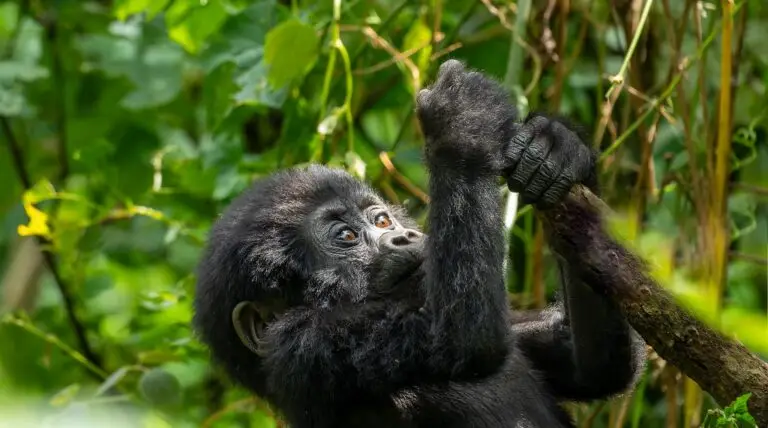
Being face-to-face with a wild mountain gorilla is one of those rare travel experiences that genuinely changes you. There are only two places on earth where you can safely do it. Uganda and Rwanda share the mist-wrapped Virunga volcanoes, protecting approximately 65% of the world's remaining mountain gorillas. This compact corner of East Africa is the undisputed heartland of gorilla trekking.
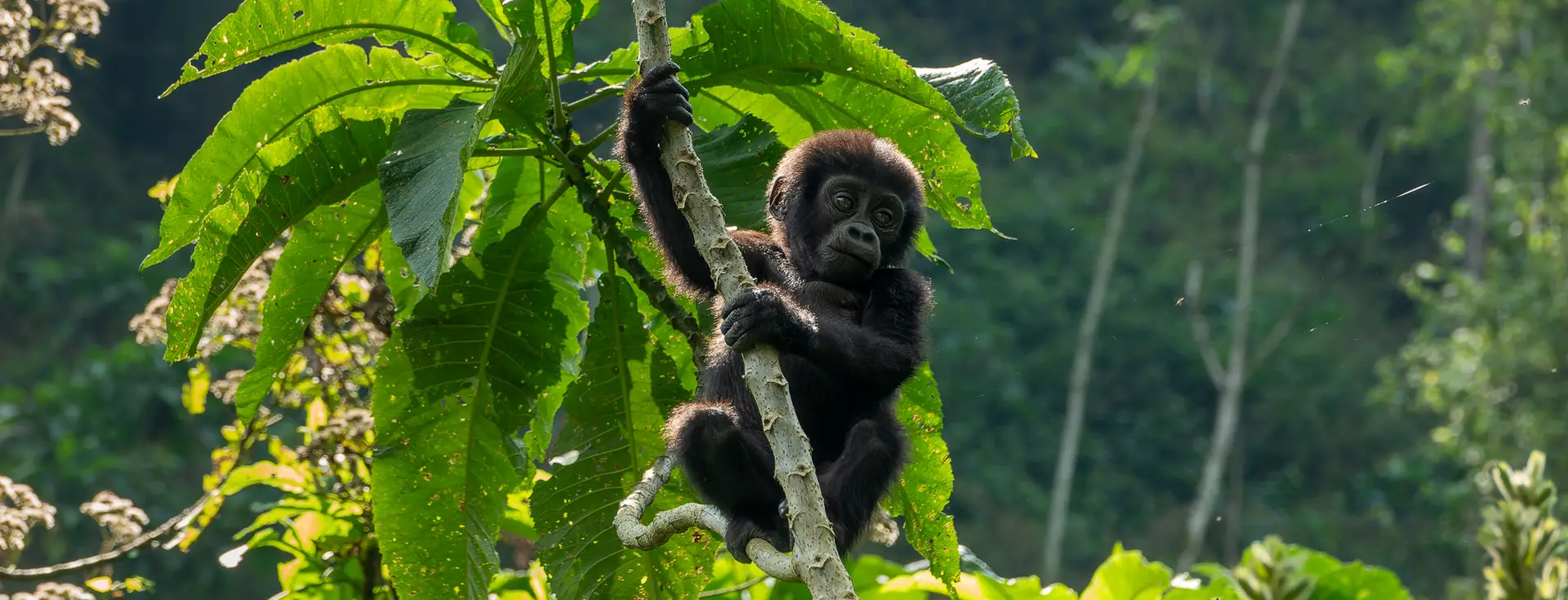
Uganda is home to more than half the world’s remaining mountain gorillas. Tracking them through the ancient, fern-draped forests of Bwindi Impenetrable National Park is one of the greatest wildlife experiences. Winston Churchill called it “the pearl of Africa” in 1908, and the title still holds true.
Uganda’s gorilla trekking permits are cheaper. Its parks are wilder, and the country offers a wider range of adventure activities. From primates to safaris, trekking, white water rafting, and cultural immersions – Uganda has it all!
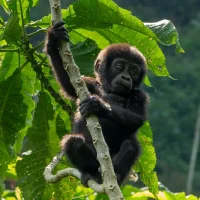
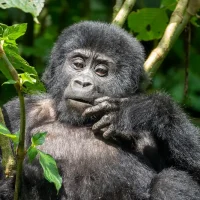
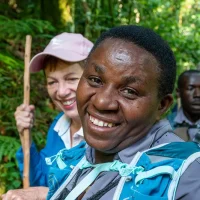
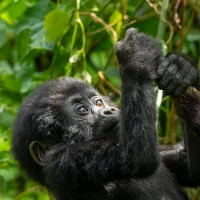
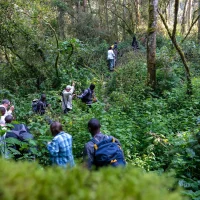
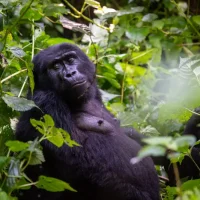
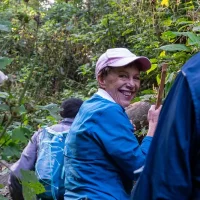
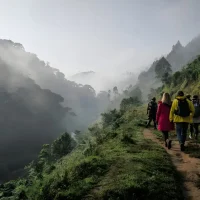
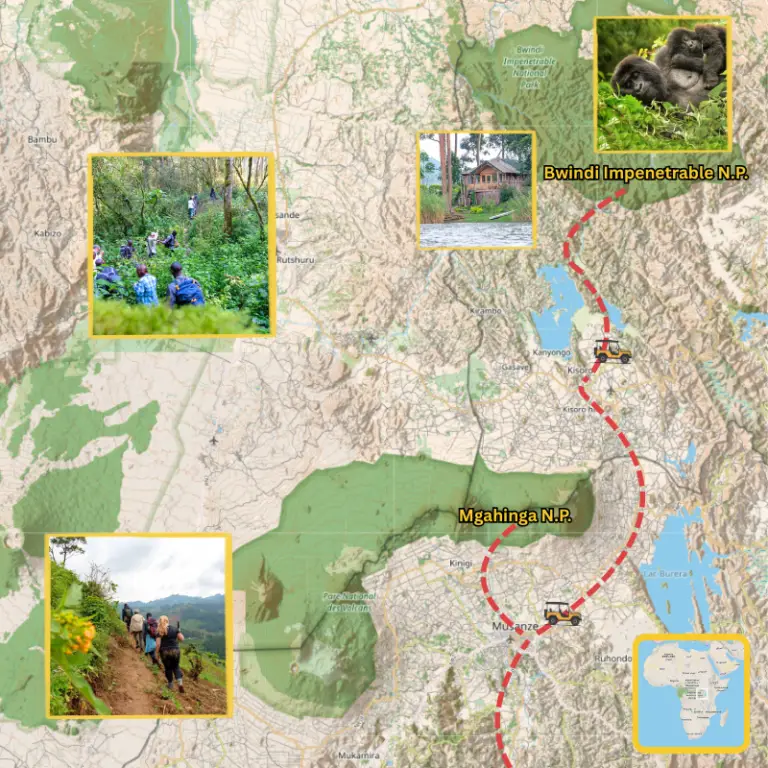
Gorilla Trekking Safari Locations
Highlights
- Trek with Mountain Gorillas in Bwindi Impenetrable National Park (Uganda) or Volcanoes National Park (Rwanda)
- Experience the rich cultures of Uganda and Rwanda as you travel
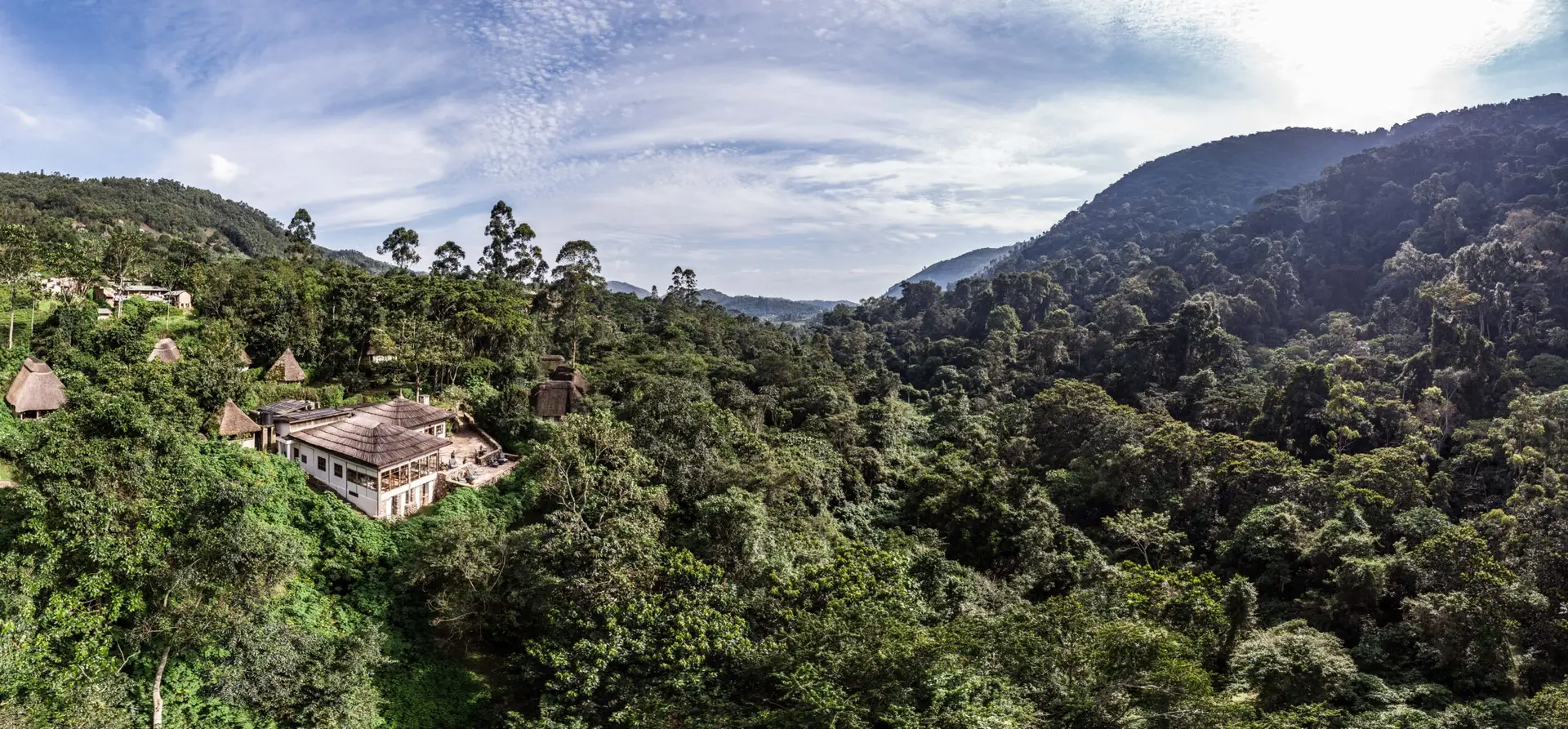
- Relax in comfort at beautiful mountain or lake lodges
- Environmentally sustainable, low impact tours
-
Travel with purpose
50% of all profits are donated to education and conservation initiatives across Africa. This means your trek makes a lasting difference long after you've returned home.
Uganda Gorilla Trekking
Bwindi N.P.
The beating heart of gorilla trekking in Uganda is Bwindi Impenetrable National Park. It is a UNESCO World Heritage Site, so ancient and ecologically dense that it feels like stepping into a prehistoric world.
Home to nearly half of the world’s remaining mountain gorillas, Bwindi’s forests are split across four trekking sectors. These include Buhoma, Ruhija, Rushaga, and Nkuringo. Each offers a different atmosphere and a humbling, up-close encounter with these majestic creatures.
Not ready to book? Make a no obligation inquiry
From $3,580 USD/pp
Rwanda Gorilla Trekking
Volcanoes N.P.
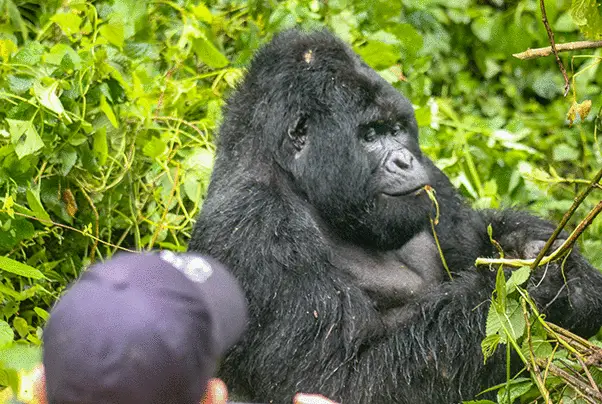
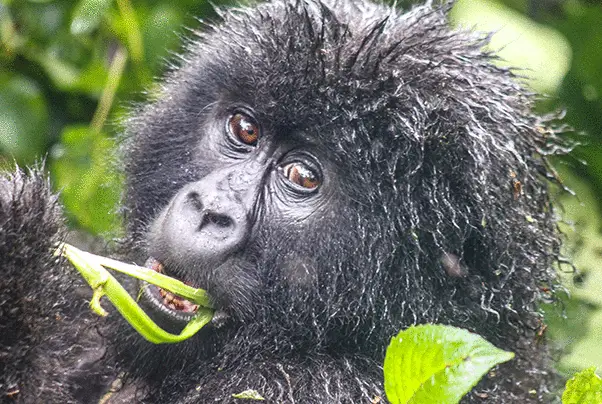
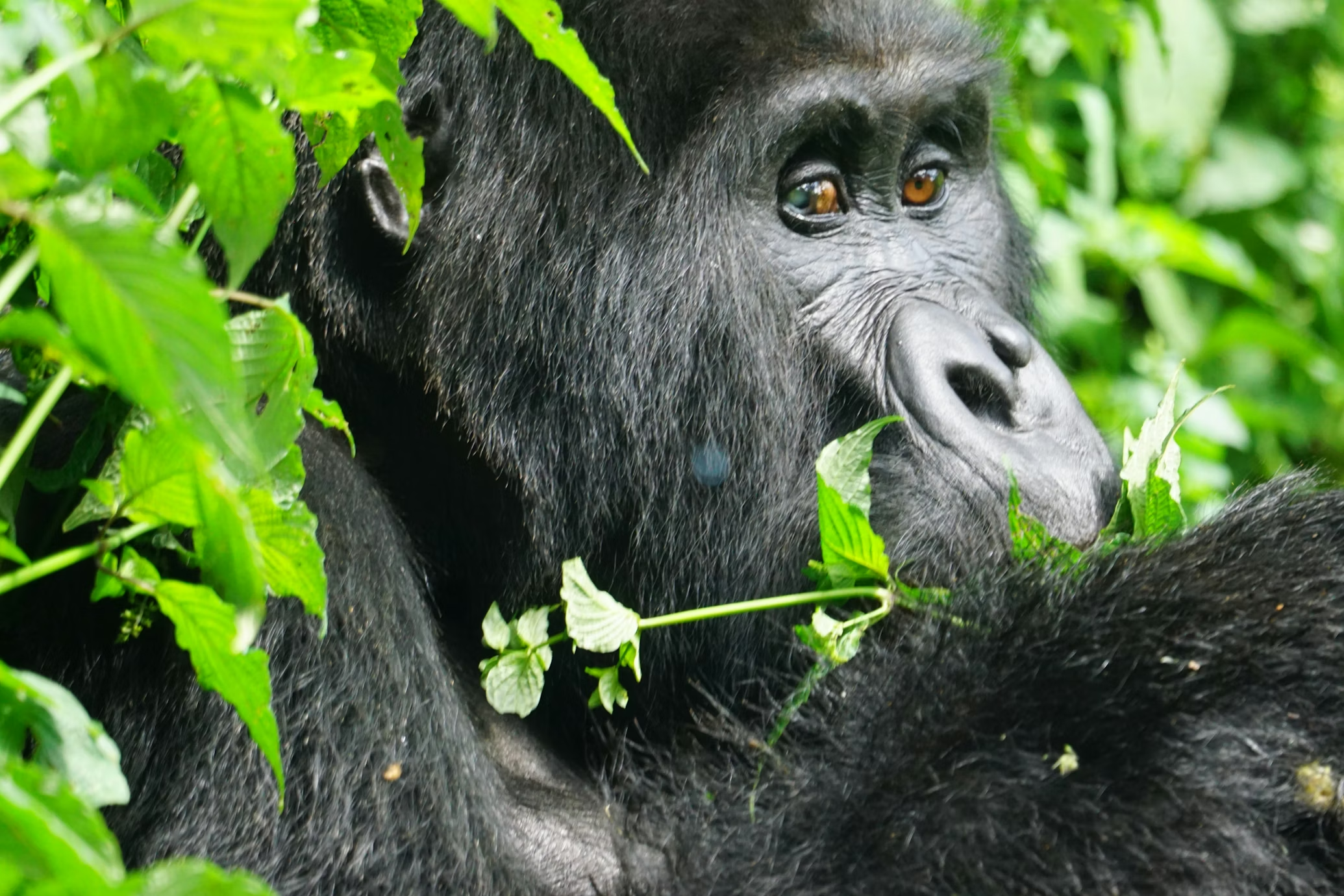
The moment a mountain gorilla meets your gaze through the forest undergrowth, everything else falls away. Volcanoes National Park is where Dian Fossey dedicated her life to understanding these remarkable creatures. Trekking through Rwanda’s mist-filled rainforests to find them feels extraordinary.
Rwanda has earned its reputation as the world’s leading gorilla trekking destination. Trails are well-managed, and guides are deeply knowledgeable. With ten habituated gorilla families, your encounter feels intimate rather than incidental.
Not ready to book? Make a no obligation inquiry
From $4,390 USD/pp
Gorilla Trekking in the Democratic Republic of Congo (DRC)
Ongoing political unrest and regional instability have made travel to certain parks and provinces currently unsafe for visitors. While our team has the resources and partnerships to organize gorilla trekking expeditions in the DRC, we are not operating tours at this time to ensure the safety of our travelers and local partners.
Have a question about Gorilla Trekking?
Gorilla Trekking packages
Gorilla Trekking Frequently Asked Questions
How much does it cost to trek with gorillas?
Gorillas are large and very strong, however they are truly the gentle giants of the African rainforest. As long as you follow the rules of your guides and keep a safe distance you will have a great time and stay safe on your gorilla trek.
How difficult is gorilla trekking really?
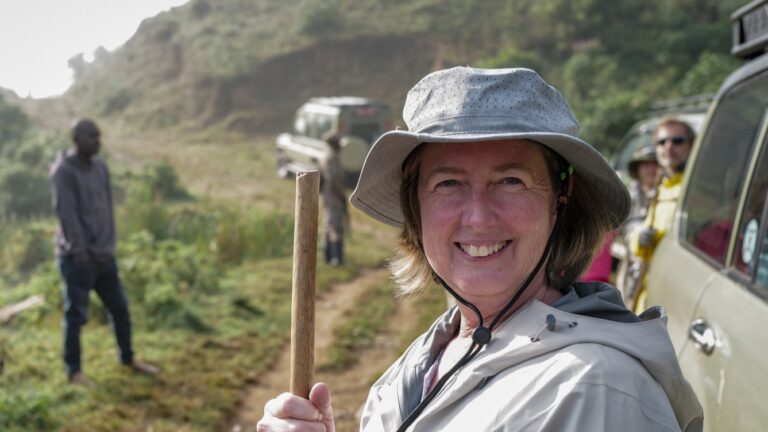
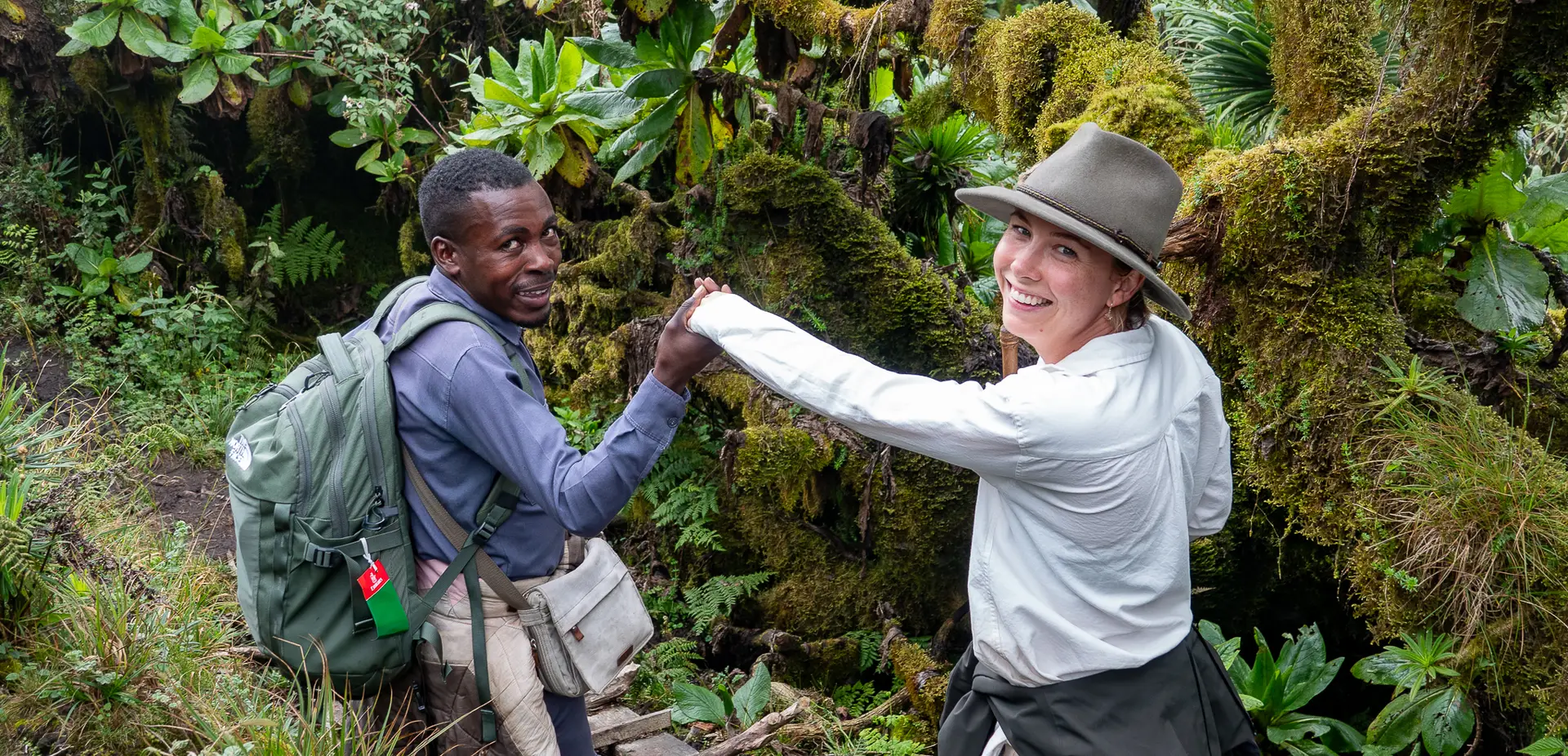
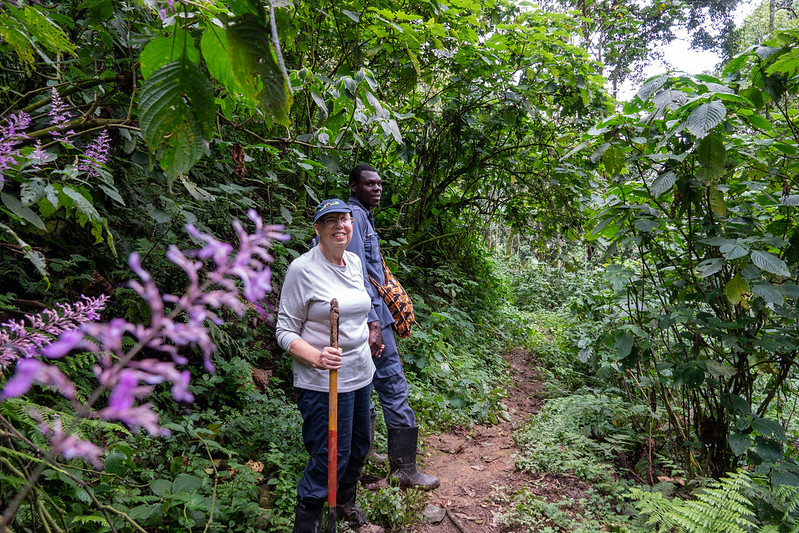
Gorilla trekking is always set to your abilities. When you meet with the rangers in the morning of your Gorilla trek in Uganda, your guide will be assigned a trail that is suitable to your requirements. Even if you have a walking disability, it’s possible for you to go gorilla trekking.
How safe is gorilla trekking?
Gorilla trekking is very safe. The guides are experts and if you listen to their rules and follow them, you will be very unlikely to have any problems. Gorillas are peaceful giants of the forest, and the habituated gorilla trekking tours are carefully managed to ensure that gorillas are not stressed by their encounters with people.
What to Know About Gorilla Trekking in Uganda and Rwanda?
Both countries offer world-class gorilla trekking but with different characteristics. Permits cost significantly more in Rwanda (US$1,500) than Uganda (US$800), though Rwanda’s shorter travel times and better roads make it a more convenient destination for those who can afford it. Trekking difficulty varies; both countries have challenging terrain, but Rwanda’s treks are often shorter and less strenuous. Uganda’s Bwindi has more habituated groups and greater biodiversity. Both require good fitness levels, though exact difficulty depends on which gorilla family you’re assigned. The best months for trekking are the drier seasons (June – February), though treks operate year-round. You must book permits well in advance, especially for peak season (July – September). Both countries have made remarkable conservation progress, with mountain gorilla populations increasing thanks to tourism revenue supporting protection efforts.
What Are Some Fun Facts About Gorillas?
Gorillas are fascinating creatures with many interesting characteristics:
- They share 98% of their DNA with humans and are our close relatives.
- Despite their powerful build, gorillas are generally gentle and primarily herbivorous, spending much of their day eating vegetation.
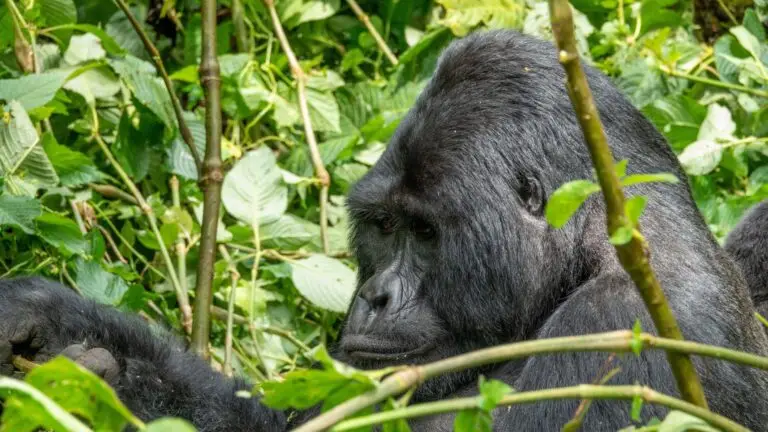
- A silverback (adult male) can weigh up to 220kg (485 lbs) and is approximately 10 times stronger than an adult human.
- Gorillas live in close family groups led by a dominant silverback.
- Gorillas display complex emotions and social behaviors, communicate through vocalizations, gestures, and body postures.
- Gorillas build new nests to sleep in every night. They go where the food is and usually sleep next to, or in it, and then move on to a new patch of lush undergrowth in the rainforest the next morning.
- Each gorilla has unique fingerprints and nose prints, just like humans.
- Mountain gorillas cannot survive in captivity, making conservation of their natural habitat critical.
Which country is best for gorilla trekking?
Uganda and Rwanda are the primary choices, each with distinct advantages. Uganda offers better value and more options, while Rwanda provides superior accessibility, infrastructure and luxury. The “best” choice depends on your budget, time constraints, physical fitness, and travel preferences.
What are the environmental benefits of gorilla trekking?
Gorilla trekking provides significant environmental benefits by creating economic incentives for conservation. Tourism revenue funds park protection, anti-poaching patrols, and habitat preservation. The high value placed on living gorillas has helped reduce poaching and habitat destruction, as communities benefit financially from keeping forests intact. Revenue sharing programs provide local communities with income from tourism, reducing pressure to convert forest land for agriculture. Gorilla tourism has contributed to the mountain gorilla population increasing from critically endangered levels to over 1,000 individuals. The protected areas also preserve broader biodiversity, protecting countless other species. Additionally, international attention from tourism has increased political will for conservation and encouraged regional cooperation in protecting transboundary ecosystems.
What time does gorilla trekking start?
Gorilla trekking typically begins with a briefing at park headquarters between 7:00-8:00 AM, with the actual trek starting around 8:00-8:30 AM. You’ll need to arrive earlier to complete registration and permit verification. The early start is important because it maximizes your chances of finding gorillas while they’re still in their nesting areas and before the midday heat. Treks can last anywhere from 1 to 8 hours depending on gorillas location, though most last 2-6 hours. After locating the gorillas, you’ll spend one hour with them before returning. Most trekkers are back at the park headquarters by early to mid-afternoon, though some longer treks may extend into late afternoon.
What is the meaning of 'Gorilla Trekking'?
Gorilla trekking refers to the activity of hiking through mountain forests to observe wild mountain gorillas in their natural habitat. It is also often referred to as Gorilla Tracking. Unlike traditional wildlife viewing from vehicles, trekking involves walking on foot, often through challenging terrain, to locate a specific habituated gorilla family. The experience combines adventure hiking with rare wildlife observation. The term emphasizes the journey aspect; you must actively search and hike to find the gorillas rather than simply visiting them at a fixed location. It’s considered one of the most intimate wildlife experiences available, allowing close observation while following strict protocols to protect both gorillas and visitors.
How old do I have to be to trek with gorillas?
The minimum age for gorilla trekking is 15 years old in both Uganda and Rwanda. This age restriction exists for several reasons: the trek can be physically demanding and require sustained endurance, younger children may have difficulty following the strict behavioral rules necessary for safety, children are more likely to carry common illnesses that could be transmitted to gorillas, and the experience requires a level of maturity to remain calm and quiet around powerful wild animals. There is no official maximum age limit, and people in their 70s and even 80s have successfully completed treks, though good fitness and health are essential regardless of age. Some operators may require medical clearance for elderly trekkers.
Can I get an exemption to trek with Gorillas if I am under 15 years old?
You can apply for an exemption if you are younger than 15. Exemptions are usually offered to those who can demonstrate maturity and physical ability, and who are turning 15 soon. Size is also a factor, and small children who are aged under 15 are less likely to be granted an exemption.
What Not to Wear Gorilla Trekking?
Avoid wearing bright colors or white clothing, which can startle gorillas and attract insects; instead choose neutral, earthy tones like green, brown, or khaki. Don’t wear short pants or short sleeves, as you need protection from thorny vegetation, insects, sun and stinging nettles. Avoid noisy fabrics that rustle loudly, as this can disturb the gorillas. Don’t wear new or stiff hiking boots that aren’t broken in, as this can cause painful blisters during the trek. Avoid loose or dangling jewelry that could get caught in vegetation. Don’t wear strong perfumes or colognes, as strong scents may disturb gorillas. Sandals, flip-flops, or casual shoes are completely inappropriate for the challenging, often muddy terrain. Similarly, avoid cotton clothing that stays wet; moisture-wicking fabrics are much better.
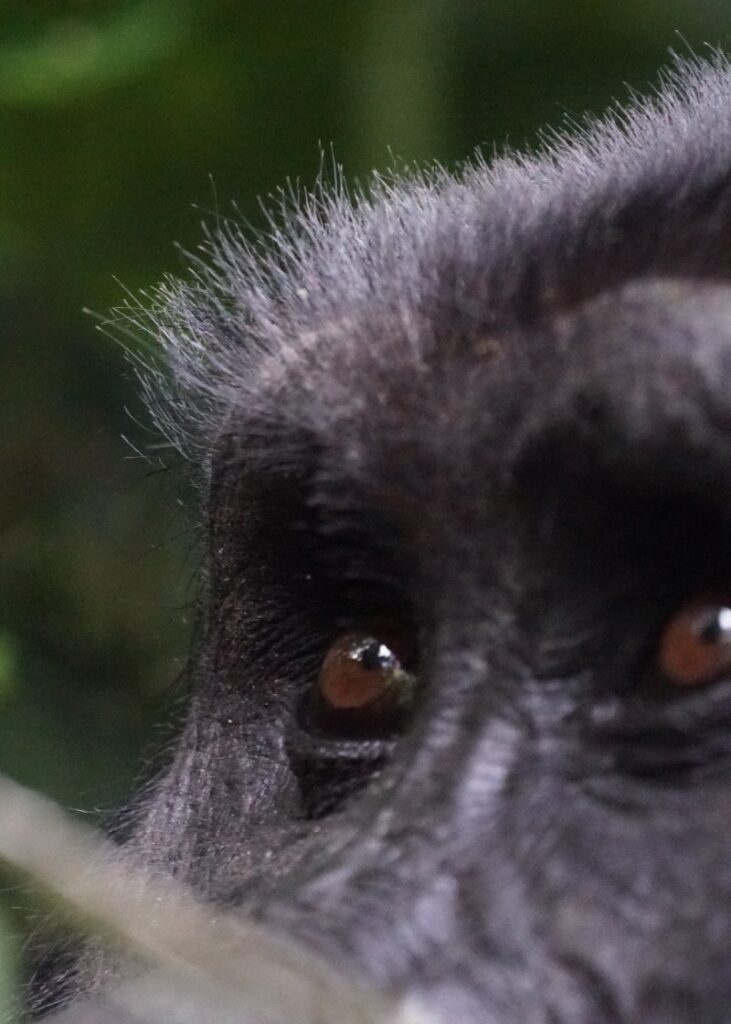
What Happens If I Make Eye Contact with a Gorilla?
Direct, prolonged eye contact with a gorilla, particularly a silverback, can be perceived as a threat or challenge, potentially triggering defensive behavior. If you accidentally make eye contact, you should calmly look down or away in a submissive gesture. However, brief, incidental eye contact is generally not a problem, especially with habituated gorillas accustomed to human presence. Your guide will instruct you to avoid staring directly at gorillas. If a gorilla charges or displays aggressive behavior, you should remain calm, crouch down to make yourself smaller, look down, and avoid direct eye contact until the gorilla calms. Following your guide’s instructions is crucial, as they’re experienced in reading gorilla behavior will help ensure safe interactions.
Which Month Is Best for Gorilla Trekking in Uganda or Rwanda?
The best months are generally during the two dry seasons: June to September and December to February. During these periods, trails are less muddy and slippery, hiking is easier and more comfortable, and conditions are generally more pleasant. However, gorilla trekking is possible year-round, and the wet seasons (March-May and October-November) have advantages too: permits may be cheaper or more readily available, there may be fewer tourists, landscapes are lusher and more beautiful, and some lodges offer discounted rates. June-September is peak season with the best weather but requires earliest permit booking.
Is the Habituation Experience harder?
Yes! The gorillas you visit during the Habituation Experience in Uganda are less used to humans and will spend more time avoiding you than habituated gorillas do. This is part of the reason you spend 4 hours with them. This experience is much more challenging and requires more trekking experience and patience.
Which is better for gorilla trekking, Uganda or Rwanda?
Both countries offer excellent gorilla trekking, depending on what you seek. Rwanda’s Volcanoes National Park is more accessible, with shorter drives from Kigali (about 2–3 hours) and generally easier terrain. This makes treks less physically demanding. The experience is more exclusive and streamlined but comes at a greater cost.
Permits cost US$1,500pp, and most accommodation starts at US$1,000 per person per night or more. Uganda offers better value with significantly lower permit costs (US$800pp). Bwindi Impenetrable National Park has more habituated gorilla families and greater biodiversity. Uganda also offers the unique gorilla habituation experience.
Where is the best place to trek with gorillas?
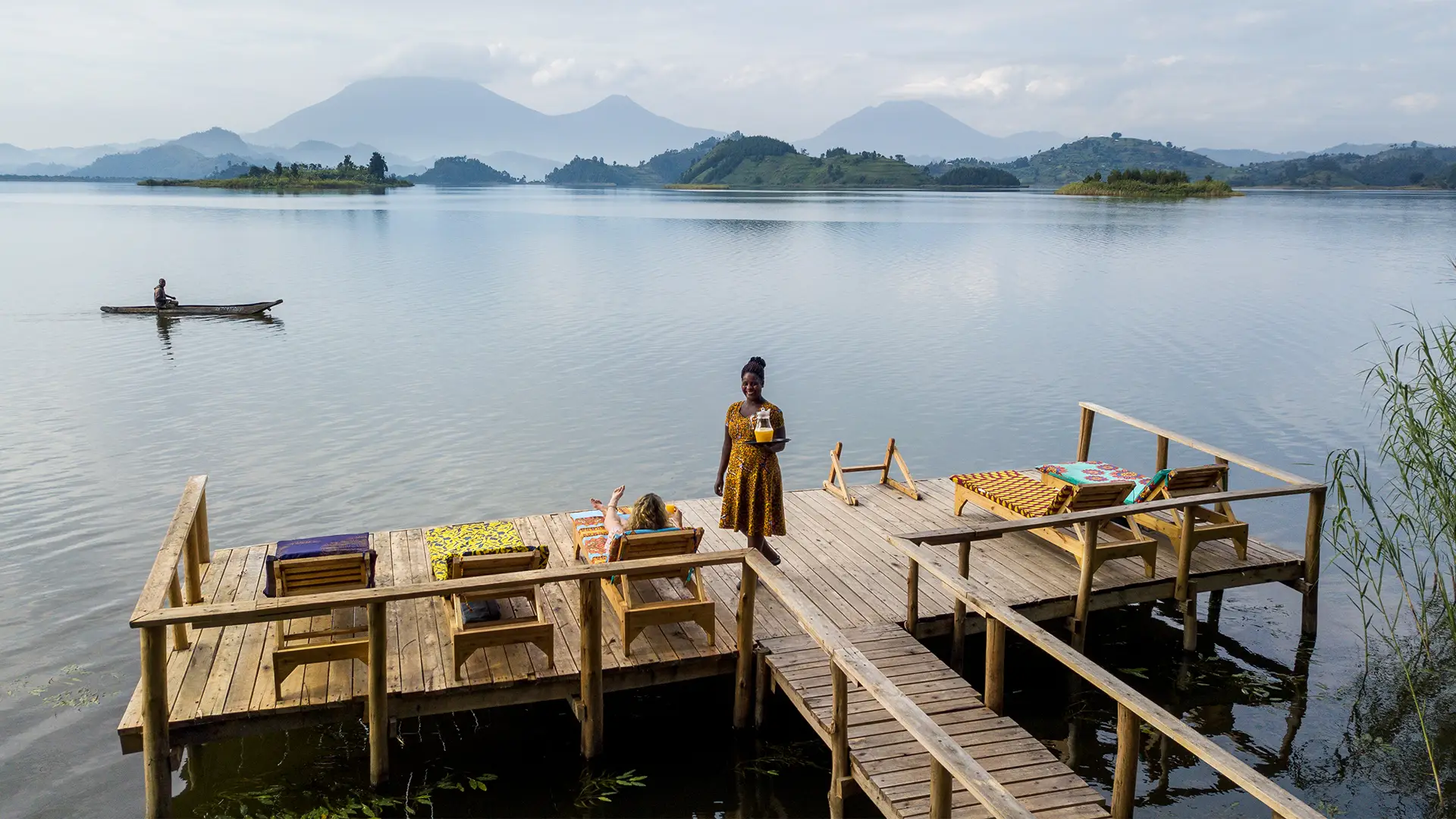
Rushaga & Nkuringo are our favorite areas. They offer the rare chance to track golden monkeys through ancient bamboo forest in Mgahinga Gorilla National Park, where wildlife encounters are extraordinary. Unwind between treks on the pristine shores of Lake Mutanda.
Travel knowing your adventure gives back, with 50% of profits donated to education and conservation initiatives across Africa.
How Long Does Gorilla Habituation Take?
Gorilla habituation is the process of gradually accustoming wild gorillas to human presence, usually taking 2–3 years. During this time, researchers and trackers spend increasing amounts of time with a gorilla family, slowly reducing distance until the gorillas tolerate observers at close range without showing stress or aggression.
In Uganda’s Bwindi Impenetrable National Park, the gorilla habituation experience allows for a 4-hour encounter, compared to the standard 1-hour trekking experience.
Is Gorilla Tracking Worth It?
Yes, gorilla trekking is widely considered one of the world’s most profound wildlife experiences. Coming face-to-face with mountain gorillas in their natural habitat is emotionally powerful and unforgettable. This experience supports critical conservation efforts, helping mountain gorilla populations increase from around 680 in 2008 to over 1,000 today.
How much does gorilla trekking cost per person in Uganda?
Gorilla trekking permits in 2026 for Uganda cost US$800 per person for foreign non-residents, US$700 for foreign residents, and significantly less for East African citizens. The gorilla habituation experience permit costs US$1,500 for foreign non-residents. Total costs typically range from US$1,500 to $4,000+ per person depending on comfort level and stay length.
Why Do You Have to Wear a Mask When Gorilla Trekking?
Masks are required during gorilla trekking to protect these endangered animals from human diseases. Mountain gorillas share approximately 98% of their DNA with humans, making them highly susceptible to human pathogens. If you’re sick, you’re not permitted to trek at all.
Which African Country Is Famous for Gorillas?
Uganda, Rwanda, and the Democratic Republic of Congo (DRC) are particularly famous for mountain gorillas. Uganda hosts about half of the world’s known mountain gorilla population in Bwindi Impenetrable National Park and Mgahinga Gorilla National Park. Rwanda’s Volcanoes National Park is internationally renowned, partly due to Dian Fossey’s pioneering research.
What Do You Need for Gorilla Trekking?
Essential items for gorilla trekking include sturdy waterproof hiking boots, long-sleeved shirts and long pants (preferably in neutral colors), a rain jacket, gardening gloves for vegetation protection, a daypack, sufficient water, energy snacks, insect repellent, sunscreen, and a face mask. Bring your passport for permit verification, and a camera without flash.
Should I hire a porter?
Gorilla trekking permits in Uganda cost US$800 per person for foreign non-residents, US$700 for foreign residents, and significantly less for East African citizens. The gorilla habituation experience permit costs US$1,500 for foreign non-residents. We recommend checking current prices with the Uganda Wildlife Authority or a reputable tour operator.
Which Country Is Best for Gorilla Trekking?
There’s no single “best” country for gorilla trekking, as it depends on your priorities. Rwanda excels in accessibility and luxury experiences. Uganda offers the best value with lower permit costs and more options. The DRC’s Virunga National Park is adventurous but requires careful consideration of current security conditions.
What are the rules for gorilla trekking?
Key rules include:
- maintaining a minimum 7-meter distance from gorillas
- no trekking if you’re ill
- wearing a mask
- keeping voices low
- no eating near gorillas
- limiting time with gorillas to one hour
- keeping groups to a maximum of 8 people
- no flash photography
- being 15 years or older
- following your guide’s instructions
- no touching gorillas even if they approach you
- turning away if a gorilla charges
- burying human waste at least 30cm deep
These rules protect both gorillas and visitors, as gorillas are powerful wild animals.