Is Gorilla Trekking Safe? Gorillas, Health & Travel Safety Explained
Last updated: 11 November 2026
If you’ve ever seen a video of a gorilla charging or a chimp getting a bit too close for comfort, you’ve probably asked yourself one thing: is gorilla trekking actually safe?
It’s a fair question. You’re stepping into the world of wild animals that are incredibly strong, intelligent and unpredictable. But the reality might surprise you.
The short answer: yes. Trekking with habituated gorillas and chimpanzees has an excellent safety record when you follow your ranger’s instructions. The real risks are more ordinary: steep, muddy terrain, your own health, and staying up to date with travel advice for the country you’re visiting.
Why gorilla trekking is safer than it looks
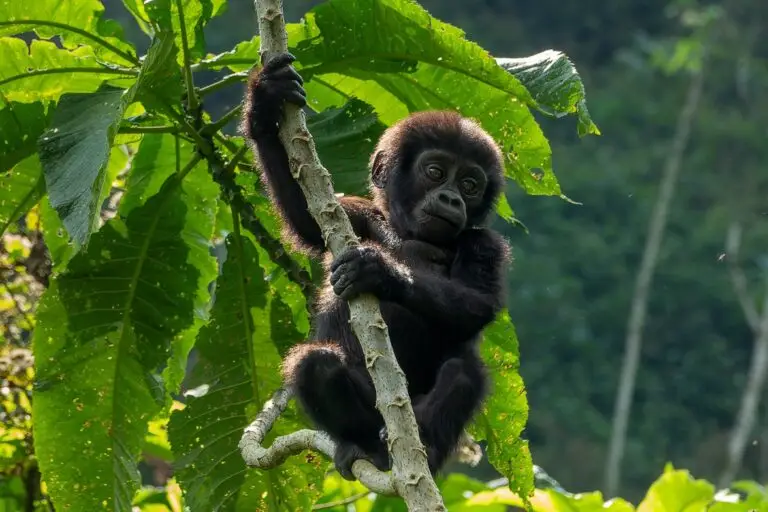
You’re visiting habituated families. The gorillas you trek to see have spent years, often two or more, getting used to calm human visitors. Trackers check on them every day and know each family’s members and moods.
You’re never alone. Every trek is led by trained rangers, usually with armed escorts in the forest, plus trackers who find the family before you arrive. They read the gorillas’ behaviour, control how close you get and tell you exactly what to do.
The rules are designed for safety. You’ll be briefed before you set off:
- Groups are capped at 8 visitors per gorilla family, for one hour a day.
- Keep at least 7 metres from the gorillas, and follow your ranger’s lead if they move closer.
- Stay quiet, move slowly and don’t point, stare at a silverback or use flash.
- Stay with your group, and never eat or drink near the gorillas.
These rules are the reason incidents are so rare. For the full list, see gorilla trekking rules and etiquette.
What about those viral gorilla "attacks"?
You’ve probably seen them: a gorilla pushing someone, a loud charge, a tense moment.
Most of these aren’t attacks; they’re warnings. Silverbacks are protective, and if they feel their family’s space is being crossed they may step forward, beat their chest, vocalise or give a quick push. It’s their way of saying “that’s close enough.”
If a gorilla charges or comes towards you:
- Don’t run. Stay still or step back slowly as your ranger directs.
- Crouch down and look away; avoid eye contact with the silverback.
- Stay quiet and keep your arms by your side.
- Let your ranger handle it. They’ll use calm sounds the gorillas recognise.
Respond calmly and the situation almost always settles within seconds. It’s less about aggression and more about communication.
The real risks: terrain, altitude and health
The biggest risks on a gorilla trek aren’t the animals. They’re the forest and your own body.
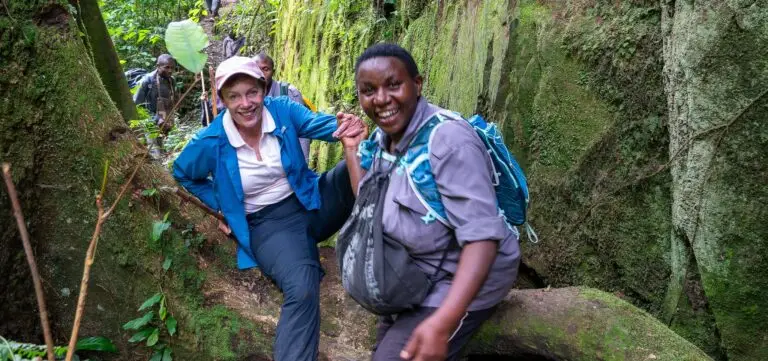
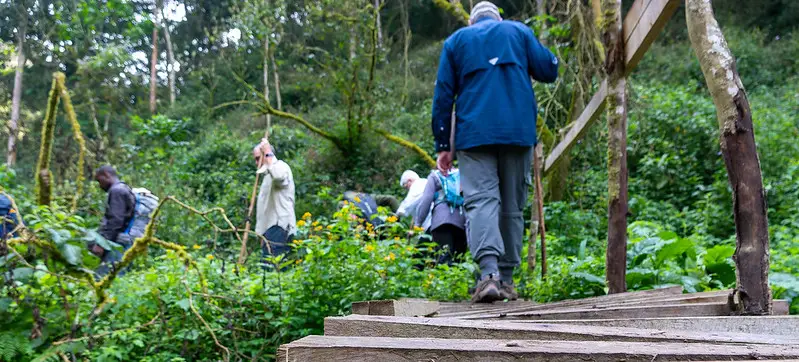
- Terrain: trails can be steep, muddy and slippery, often off-path through thick vegetation. Twisted ankles and falls are the most common injuries. Wear broken-in waterproof boots, use the walking stick your ranger gives you, and hire a porter to help on the steepest sections.
- Altitude and effort: treks run at roughly 1,200–3,000 metres and can take anywhere from one to six hours or more. Read how fit you need to be.
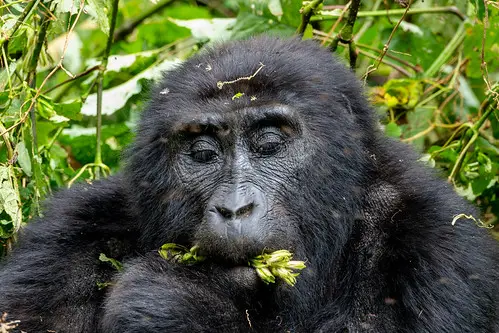
- Disease, both ways: gorillas share about 98% of our DNA and can catch human colds, flu and other infections. Anyone visibly unwell will be turned away, and you may be asked to wear a face mask near the family. Check vaccination and health requirements (such as yellow fever and malaria prevention) with your doctor or a travel clinic well before you go.
- Travel insurance: make sure your policy covers trekking, medical evacuation and cancellation, including if you’re turned away from a trek because you’re sick.
Chimpanzees vs Gorillas
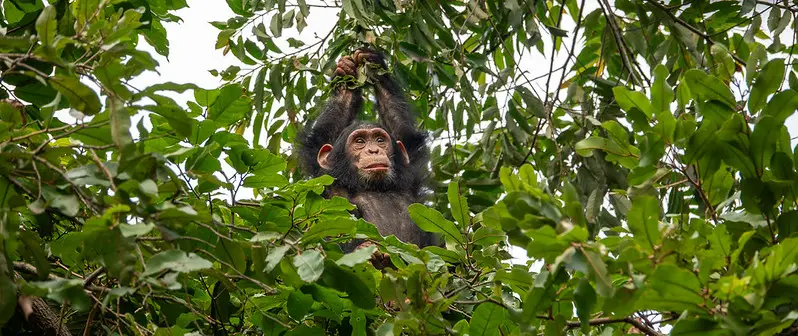
Chimpanzee trekking feels a bit different.
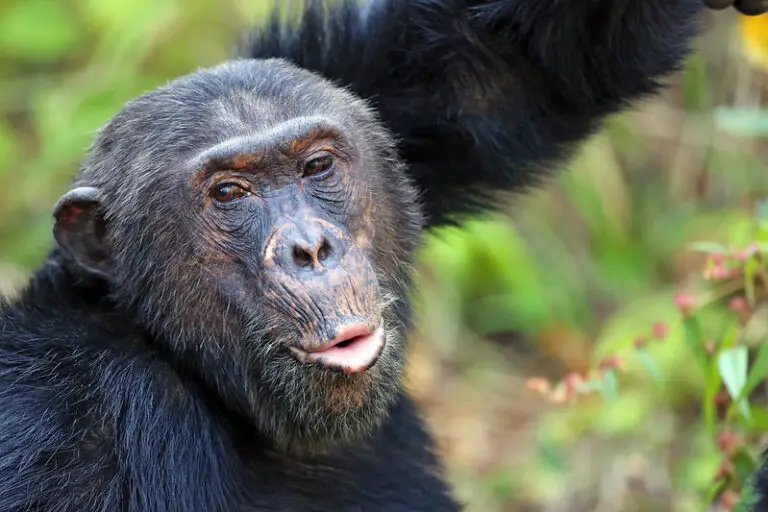
Chimps are more energetic, more vocal, and always on the move. You might hear them before you see them. There’s more noise, more movement, and sometimes a bit more unpredictability.
Gorillas, on the other hand, are calmer and more grounded. Time with them often feels quiet and deeply humbling.
Both are safe experiences, just slightly different in energy.
Is it safe to travel to Uganda, Rwanda and the DRC?
The trek itself is tightly managed, but you also need to think about the country you’re travelling through. Government travel advice changes, so always check it before you book and again before you fly. Australians can use Smartraveller.
- Uganda: Smartraveller currently advises Australians to exercise a high degree of caution in Uganda, with higher advice levels for some border areas. Bwindi and Mgahinga lie in the far southwest near the DRC border, so check the latest advice for that region and travel with an experienced operator.
- Rwanda: Smartraveller currently advises normal safety precautions for Rwanda overall, with higher advice levels close to the borders with the DRC and Burundi. Volcanoes National Park sits on the DRC border, so stay with your rangers and on organised itineraries.
- DRC: mountain gorilla trekking in Virunga National Park is closed to visitors, and Smartraveller advises against travel to the DRC. We don’t recommend it.
Health advice can change quickly too. In 2026, Ebola outbreaks in the region led to extra health screening at some borders. A good operator will keep you updated on current conditions and adjust your itinerary if needed. For more, read how safe is it to visit East Africa.
What makes the trek itself safe is the system behind it: permits are limited, groups are small, rangers are highly experienced and conservation is at the centre of everything. This isn’t mass tourism. It’s carefully managed, intentional and respectful.
So should you be worried?
Not really.
You should respect the experience, listen carefully to your guide, and understand that you are entering a wild environment.
But fear is not what you should feel.
If anything, most people walk away wondering why they were ever nervous in the first place.
A final thought
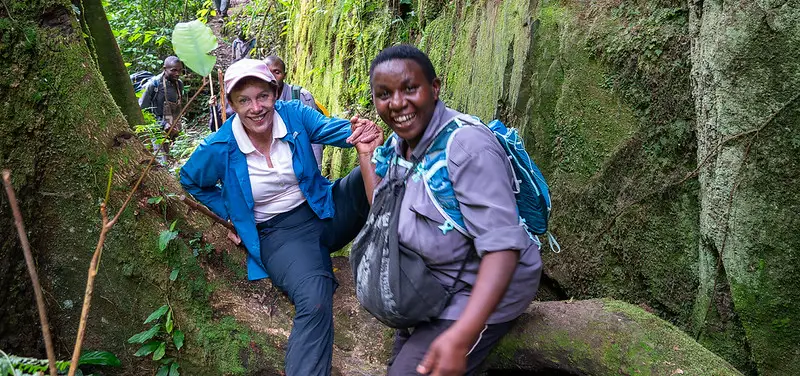
There’s something powerful about standing a few metres from a gorilla or hearing chimps call through the forest. It reminds you that we’re not separate from nature but part of it.
Done right, with a good operator, up-to-date travel advice and a ranger you listen to, it’s not just safe. It’s one of the most meaningful wildlife experiences you can have.
Ready to start planning? Read our gorilla trekking guide for permits, costs and what to expect, or see our gorilla trekking tours in Uganda and Rwanda.
Gorilla trekking safety FAQs
Have gorillas ever hurt tourists?
Serious injuries to tourists from habituated mountain gorillas are extremely rare. Most incidents are bluff charges or pushes, which settle quickly when visitors follow the ranger’s instructions.
What should I do if a gorilla charges?
Don’t run. Stay still or step back slowly, crouch down, look away from the silverback and let your ranger handle it.
Are there armed rangers on gorilla treks?
Yes. Treks are led by park rangers, usually with armed escorts. The weapons are there to protect against forest elephants or buffalo and as a security measure, not to use on the gorillas.
Can I go gorilla trekking if I have a cold?
No. Gorillas are highly vulnerable to human illnesses, so anyone who is visibly unwell won’t be allowed to trek. Make sure your travel insurance covers this.
Is Uganda or Rwanda safer for gorilla trekking?
Both run carefully managed treks. Smartraveller currently rates Rwanda at normal precautions overall and Uganda at a high degree of caution, with higher levels near the DRC border in both. Always check the latest advice before you book.
Is gorilla trekking safe for older travellers?
Yes, with preparation. Ask for a closer gorilla family, hire a porter, take your time, and choose your park carefully. Treks in Rwanda’s Volcanoes National Park and Uganda’s Mgahinga are often a little easier than in Bwindi.