Is Africa Dangerous?
The Question Every First-Time Safari Traveller Asks
You’ve been dreaming about it for years. The Serengeti at sunrise. Elephants crossing the Chobe River. Gorillas in the mist above Bwindi. And then someone at a dinner party says it: “Africa? Isn’t that dangerous?”
It’s the question that stops more dream safaris in their tracks than any other. And it deserves a real answer — not a dismissive wave, and not a fear-mongering headline.
Here’s the truth: Africa is a continent of 54 nations, each with its own safety profile, culture, and risk landscape. Asking “is Africa dangerous?” is a bit like asking “is Europe dangerous?” — the answer depends entirely on where you’re going, how you’re travelling, and who you’re travelling with.
In 2024, 74 million international tourists visited Africa — up 12% on the previous year. Over 372,000 Americans visited South Africa alone. Tanzania welcomed a record 2.14 million international visitors. These aren’t the numbers of a continent people are afraid to visit.
So let’s break it down — country by country, risk by risk — so you can make an informed decision about your own African adventure.
Is Africa Dangerous? The Big Picture
The short answer: for the vast majority of safari destinations, no — not in the way most people imagine.
The “deep, dark Africa” narrative is one of the most persistent travel myths in existence. It’s fuelled by Western media that disproportionately covers conflict, disease, and poverty while ignoring the continent’s thriving democracies, world-class tourism infrastructure, and remarkable natural beauty.
Here’s what the data actually shows:
Safari tourism records just 1–2 wildlife-related deaths per year across 3–5 million annual participants — a fatality rate of 0.5–1.0 per million. That’s statistically safer than scuba diving, rock climbing, or visiting Las Vegas.
Many African countries outperform Western nations on safety metrics. Ghana has a lower crime rate than Canada or the United States. Tanzania is more peaceful than France. Zambia outperforms China and India in global safety rankings.
Tourism is an economic lifeline across safari nations — contributing 8%+ of GDP and supporting 24 million jobs. Governments have a powerful financial incentive to keep tourists safe.
The key insight? Most tourist areas are geographically isolated from conflict zones. The Serengeti is hundreds of kilometres from Tanzania’s Mtwara terrorism risk area. Kenya’s Maasai Mara is far from the Somalia border. Bwindi’s gorilla trekking circuits are well-managed and secure, even though Uganda’s DRC border carries elevated risk.
Country-level travel advisories often don’t reflect the safety of specific tourist circuits — and that’s where most travellers go wrong.
A country by country breakdown of safety for travellers
Is Kenya Dangerous?
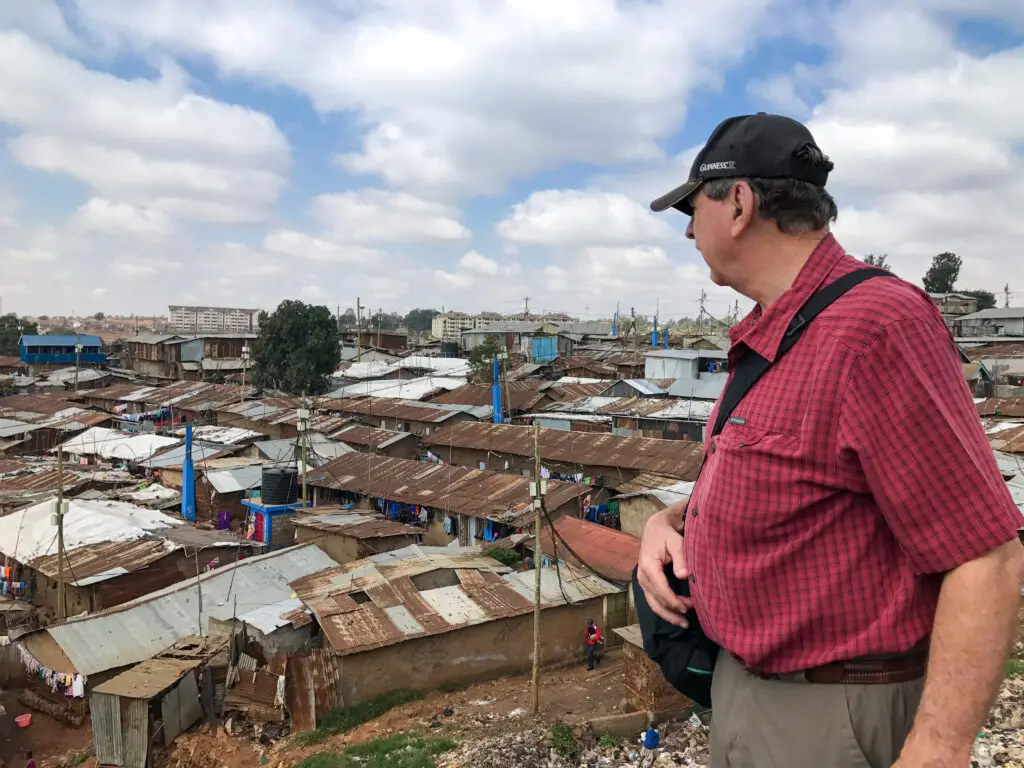
Kenya holds a U.S. Level 2 travel advisory (Exercise Increased Caution), which sounds alarming until you look at the specifics. The elevated risk areas are the Kenya-Somalia border, coastal kidnapping zones, and specific Nairobi neighbourhoods like Eastleigh and Kibera — none of which appear on a typical safari itinerary.
The Maasai Mara carries no elevated travel warning. Amboseli, Tsavo, Samburu — all considered safe with reputable operators. Kenya welcomed 2.4 million visitors in 2024, and the safari industry is thriving.
Nairobi does require genuine caution: petty crime, carjacking, and opportunistic theft are real risks in the city. Use hotel-arranged transport, avoid walking alone at night, and skip the matatus (minibuses). One practical tip: the Nairobi-to-Mara road is a 5.5–6 hour drive on rough roads. Flying in (45 minutes) is significantly safer and well worth the upgrade.
Bottom line: Kenya’s safari parks are safe. Nairobi requires smart urban precautions. Book with a licensed operator and you’ll have a brilliant trip.
Is Tanzania Dangerous?
Tanzania currently holds a U.S. Level 3 advisory (Reconsider Travel), elevated in late 2025 following post-election unrest and citing terrorism risk in the Mtwara region. This has caused understandable concern — but context is everything.
The Mtwara region is on Tanzania’s far southern coast, near the Mozambique border. The Serengeti, Ngorongoro Crater, Tarangire, and Lake Manyara are hundreds of kilometres away on the Northern Circuit, and operated normally even during the post-election disturbances. The Tanzania Association of Tour Operators (TATO), representing 300+ companies, reported no security threats to tourists or main attractions.
Zanzibar has a 99% safety rating for tourists — only minor pickpocketing cases are reported. Note that mandatory travel insurance from the Zanzibar Insurance Corporation is now required for all visitors.
Tanzania welcomed a record 2.14 million international tourists in 2024 — its best year ever. The Northern Safari Circuit remains one of the world’s great wildlife experiences.
Bottom line: The Level 3 advisory reflects country-wide factors, not the safari zones. Book the Northern Circuit with a licensed operator and you’re in safe hands.


Is South Africa Dangerous?
South Africa has the most complex safety profile of any major safari destination. It is simultaneously one of Africa’s most visited countries and one with genuinely high urban crime rates — and it’s important to be honest about both.
Urban crime is real. Johannesburg requires the most caution: use hotel-arranged transport, avoid driving after dark, and don’t walk in the CBD alone. Criminals have also targeted tourist vehicles on approach roads to Kruger National Park — use reputable operators and stay alert.
But here’s the other side: Cape Town, Kruger National Park, the Garden Route, and the Winelands are popular, well-managed tourist areas with visible security. Tourists are not the primary targets of violent crime, which is heavily concentrated in specific urban areas far from the safari experience.
372,000 Americans visited South Africa in 2024 — making the U.S. the country’s #1 overseas tourism market. Total arrivals reached 8.92 million.
Bottom line: South Africa rewards smart travellers. Use reputable operators, stay in established tourist areas, and apply sensible urban precautions. The wildlife and landscapes are extraordinary.
Is Botswana Dangerous?
Botswana is one of Africa’s safest and most politically stable safari destinations — and one of the most underrated. It ranks #42 globally on the 2025 Global Peace Index, making it one of the safest countries on the continent.
Violent crime against tourists is extremely rare — virtually nonexistent in Chobe National Park and the Okavango Delta. Petty crime occurs in urban areas like Gaborone and Kasane, but the safari circuits themselves are remarkably secure.
Botswana’s tourism model is high-value, low-volume — premium pricing supports conservation and creates a protected, well-managed environment. In October 2024, the ruling party lost a general election after 58 years in power — and conceded peacefully. That tells you something about the country’s stability.
Bottom line: Botswana is one of the safest safari destinations in Africa. The Okavango Delta and Chobe are bucket-list experiences in a genuinely secure environment.
Is Rwanda Dangerous?
Rwanda is consistently ranked the safest country in Africa for tourists. Its crime index of 26.6 (Numbeo) is the lowest on the continent, and Kigali scores 85.9 for daytime walking safety — among the highest of any African capital.
Gorilla trekking in Volcanoes National Park is considered one of the safest wildlife experiences in Africa. Armed rangers accompany all treks as standard protocol. The border areas near DRC and Burundi carry Level 4 warnings, but these are entirely separate from tourist circuits.
Rwanda’s remarkable post-genocide transformation into a stable, well-governed nation is one of Africa’s great modern stories — and the gorilla trekking experience is genuinely life-changing.
Bottom line: Rwanda is the safest country in Africa for tourists. Full stop.
Is Uganda Dangerous?
Uganda holds a U.S. Level 3 advisory, primarily due to ADF militant activity near the DRC border and general crime and terrorism risk. But the gorilla trekking circuits in Bwindi Impenetrable National Park and Mgahinga are well-managed and have excellent safety records.
It is routine practice for armed security personnel to accompany tourists on gorilla treks — this is standard protocol, not a sign of danger. Kampala requires standard urban precautions.
Uganda’s Level 3 advisory reflects country-wide risk factors; the gorilla trekking circuits themselves are a different story.
Bottom line: Bwindi’s gorilla trekking is a bucket-list experience that’s well-managed and safe. We only use UWA-licensed operators and follow the established routes.
Is Namibia Dangerous?
Namibia is one of Africa’s safest countries, ranking #50 globally on the 2025 Global Peace Index and holding a U.S. Level 1 advisory. Urban crime in Windhoek and Swakopmund is lower than in Nairobi, Dar es Salaam, or Johannesburg.
Etosha National Park, Sossusvlei, and Fish River Canyon are all considered very safe for tourists. The primary risk in Namibia isn’t crime — it’s road safety. Namibia is famous for self-drive safaris, but fatal accidents on gravel roads are a genuine concern: excessive speed, night collisions with kudu or cattle, and breakdowns in remote areas are the highest-consequence scenarios.
Keep speeds below 80 km/h on gravel, never drive at night outside towns, and always carry a spare tyre, ample water, and a working phone.
Bottom line: Namibia is one of Africa’s safest and most spectacular destinations. Drive carefully and you’ll have an unforgettable experience.
The Bottom Line: Is it safe to travel in africa?
Africa is not the continent of your fears. It is the continent of your dreams, and for 81 million visitors in 2025, those dreams came true.
The risks are real, but they are manageable. The key is doing your homework: choosing the right destination for your risk tolerance, booking with a licensed and reputable operator, getting the right vaccinations and insurance, and applying the same common sense you’d use anywhere in the world.
The reward? Watching a lion pride at golden hour on the Serengeti. Locking eyes with a mountain gorilla in Bwindi. Seeing the Milky Way from a camp in the Okavango Delta. Experiences that will stay with you for the rest of your life.
Don’t let a dinner party myth stand between you and the adventure of a lifetime.
Ready to start planning your African safari? Get in touch with the Adventure Out Loud team — we’ve been doing this for years, and we know how to get you there safely.
Frequently Asked Questions About Africa Travel Safety
Is Africa safe for solo travellers?
Yes — with the right preparation. Solo travellers do very well on guided safaris, where you’re always with a professional guide and fellow travellers. The key is booking with a reputable operator and applying standard urban precautions in cities. Rwanda, Botswana, Namibia, and Zambia are particularly well-suited to solo travel.
Which African country is the safest to visit?
Yes. Safari tourism records just 1–2 wildlife-related deaths per year across 3–5 million annual participants — a fatality rate of 0.5–1.0 per million. That’s statistically safer than scuba diving, rock climbing, or visiting Las Vegas. Book with a licensed operator, follow your guide’s instructions, and never exit your vehicle without permission.
Is it safe to go on safari in Africa?
Rwanda consistently ranks as the safest country in Africa for tourists, with the continent’s lowest crime index. Botswana (#42 globally on the GPI), Namibia (#50), and Zambia (U.S. Level 1 advisory) are also among the safest. Mauritius, while not a safari destination, ranks #1 in Africa on the Global Peace Index.
What is the most dangerous country in Africa for tourists?
Travellers should exercise extreme caution or avoid entirely: Somalia, South Sudan, Sudan, Libya, Burkina Faso, Central African Republic, and parts of Mali and Ethiopia. These are genuine conflict zones with active Level 4 (Do Not Travel) advisories. They are not safari destinations.
What vaccinations do I need to travel to Africa?
Yellow fever vaccination is required for entry to some countries (Tanzania, Uganda, Rwanda if arriving from yellow fever risk countries) and strongly recommended for others. Typhoid, Hepatitis A, and rabies vaccinations are also recommended. Visit a travel health clinic 6–8 weeks before departure for personalised advice and an antimalarial prescription.
Is malaria a big risk on safari?
Malaria is the most significant health risk for safari travellers, but it’s very manageable with the right precautions: antimalarial prophylaxis, DEET insect repellent, long sleeves at dusk and dawn, and insecticide-treated nets. Some areas are malaria-free or low-risk (most of South Africa outside Kruger, high-altitude Rwanda, Namibia’s desert regions).
Is it safe to travel to Africa right now?
For the major safari destinations — Kenya, Tanzania’s Northern Circuit, South Africa, Botswana, Rwanda, Zambia, Namibia, Zimbabwe’s tourist areas — yes. Check current travel advisories from your government immediately before booking and again before departure, as situations can change. Tanzania’s Level 3 advisory (elevated in late 2025) is a good reminder that advisories are dynamic.