History of Gorilla Trekking (and How Many Mountain Gorillas Are Left)
Last updated: 11 November 2026
Few of Africa’s animals have captivated people like gorillas. Thousands of travellers make the trek each year to stand in the presence of our close relatives in the animal kingdom. Mountain gorillas in particular have drawn visitors since the early 1900s. With only around 1,063 left in the wild, many consider seeing them a once-in-a-lifetime experience.
Gorillas are found only in Africa. Western gorillas live in the forests of Nigeria, Cameroon, the Central African Republic, Equatorial Guinea, Gabon, the Republic of the Congo and Angola’s Cabinda province. Eastern gorillas live in the Democratic Republic of the Congo (DRC), Uganda and Rwanda. Today, mountain gorilla trekking is possible in Uganda and Rwanda. Virunga National Park in the DRC is currently closed to visitors.
Gorilla Species
There are two species of gorilla, eastern and western, and each is split into two subspecies. Mountain gorillas, a subspecies of the eastern gorilla, are the ones most travellers go to see, so it helps to know the difference when you’re planning your gorilla adventure.
Eastern gorillas
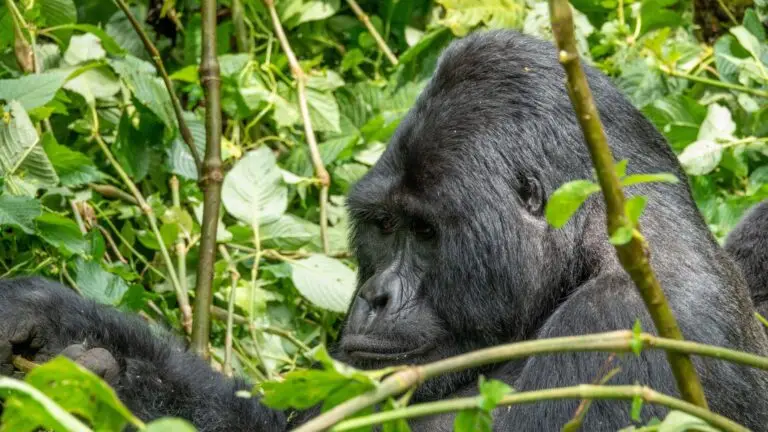
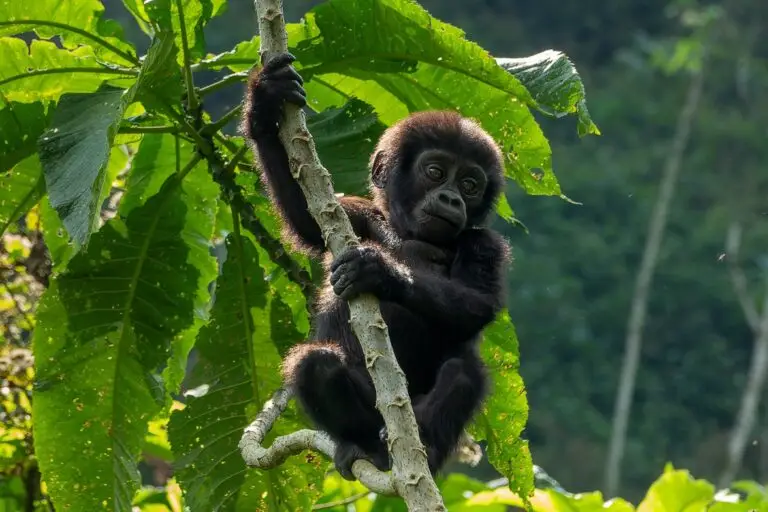
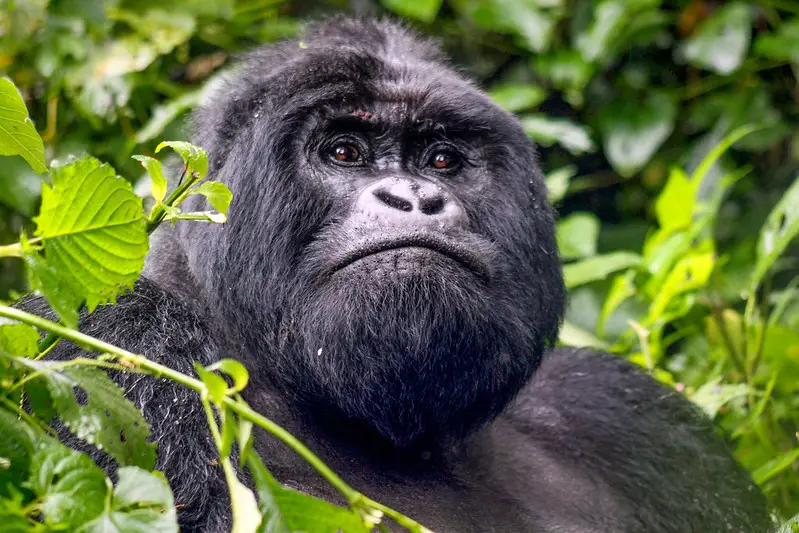
Mountain gorillas live in the high-altitude forests of the Virunga Mountains (shared by Rwanda, Uganda and the DRC) and Uganda’s Bwindi Impenetrable Forest. They’re the gorillas most people want to visit, both for their size and because they’re the most accessible. They have darker, longer and thicker fur than other gorillas, to cope with the cold of the high-altitude forests they call home. Mountain gorillas were first described by science in 1903, after a German officer, Captain Robert von Beringe, shot two on the slopes of Mount Sabyinyo in 1902. That’s why their scientific name is Gorilla beringei beringei.
Eastern lowland gorillas, also called Grauer’s gorillas, are the largest of all gorillas. They have shorter, thinner fur, live at lower altitudes and are found only in the eastern DRC. They range over large areas in search of food, which makes them harder to track.
Western gorillas
There are also two subspecies of western gorilla. Western lowland gorillas, found across Central Africa including Cameroon, Gabon and the Republic of the Congo, have wider skulls, more pronounced brow ridges, a slightly smaller build and brown-grey coats with auburn chests. They’re the most numerous gorillas, and the ones most often seen in zoos. Western gorillas were the first to be formally described by science, in 1847.
Cross River gorillas, found only in the forests on the Nigeria–Cameroon border, are the rarest gorillas in the world. Only a few hundred remain.
Gorillas and their ecological importance to the environment
Gorillas play a vital role in Central Africa’s rainforests. They spread seeds as they feed and move, and they open up the forest floor so new plants can grow. But their populations have been hit hard by habitat loss, poaching, war and disease. Because they share around 98% of our DNA, gorillas are vulnerable to human illnesses, which is why trekking rules on distance, masks and staying away when sick are taken so seriously.
Well-managed tourism has been one of the most powerful tools for protecting mountain gorillas. Permit fees fund rangers and anti-poaching patrols, and a share goes back to communities around the parks, giving local people a direct stake in keeping gorillas safe.
The history of gorilla trekking and tourism
1925: Africa’s first national park. Gorilla conservation began with the creation of Albert National Park in 1925, now Virunga National Park in the DRC. It was set up partly to protect the mountain gorillas of the Virunga volcanoes. Little was known about gorillas for decades after that.
1959–1963: the first real research. American zoologist George Schaller spent a year studying mountain gorillas in the Virungas. His 1963 book The Mountain Gorilla: Ecology and Behavior showed the world that gorillas were gentle, social animals, not the monsters of popular myth.
1967–1985: Dian Fossey. American primatologist Dian Fossey founded the Karisoke Research Center in Rwanda in 1967. Her work, and her 1983 book Gorillas in the Mist, put mountain gorillas on the world stage. In the early 1980s, censuses found only around 250 mountain gorillas left in the Virungas. Fossey was murdered at her camp in 1985, and her death drew international attention to poaching.
1970s: tourism begins. Gorilla tourism started in the DRC’s Kahuzi-Biega National Park in the early 1970s. In 1979, the Mountain Gorilla Project launched gorilla tourism in Rwanda’s Volcanoes National Park, proving that visitors’ permit fees could pay for protection.
1993: Uganda opens Bwindi. Uganda began gorilla trekking in Bwindi Impenetrable National Park in 1993. Bwindi is now home to more habituated gorilla families than anywhere else.
How many mountain gorillas are left?
The latest counts put the world’s mountain gorilla population at around 1,063, in just two places:
- The Virunga Mountains (Rwanda, Uganda and the DRC): 604 gorillas, counted in the 2015–16 census
- Bwindi Impenetrable National Park and the neighbouring Sarambwe Reserve (Uganda and the DRC): 459 gorillas, counted in 2018
That’s a remarkable recovery. Around 250 were left in the Virungas in the early 1980s, and the total was about 680 in 2008. In 2018, mountain gorillas were moved from “critically endangered” to “endangered” on the IUCN Red List, one of the few great ape species to improve. More than half the world’s mountain gorillas live in Uganda, and a new census of Bwindi began in 2025.
They’re still at risk from snares, habitat loss, disease and conflict, and that’s why responsible gorilla tourism matters.
Gorilla trekking today
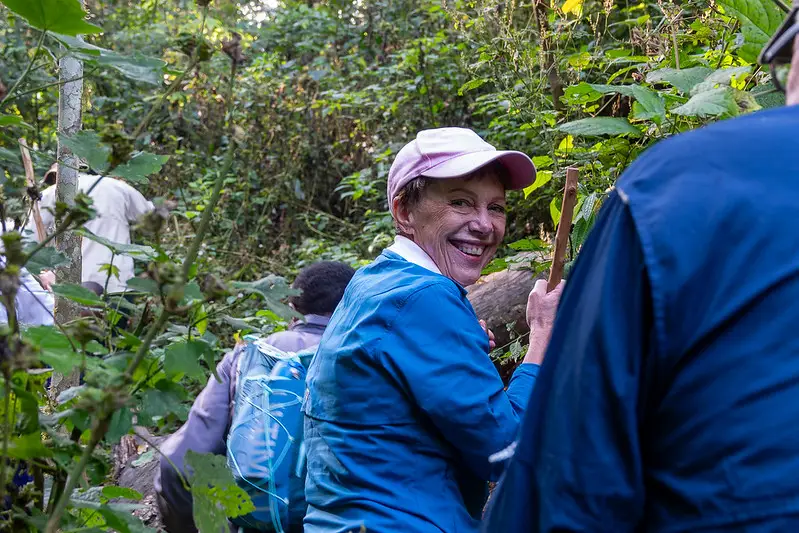
Today, tourism continues to play a vital role in protecting gorillas. Every gorilla trekking permit helps fund conservation, rangers and veterinary care, and supports jobs and community projects around the parks. That in turn gives local communities a reason to protect the gorillas and their forests.
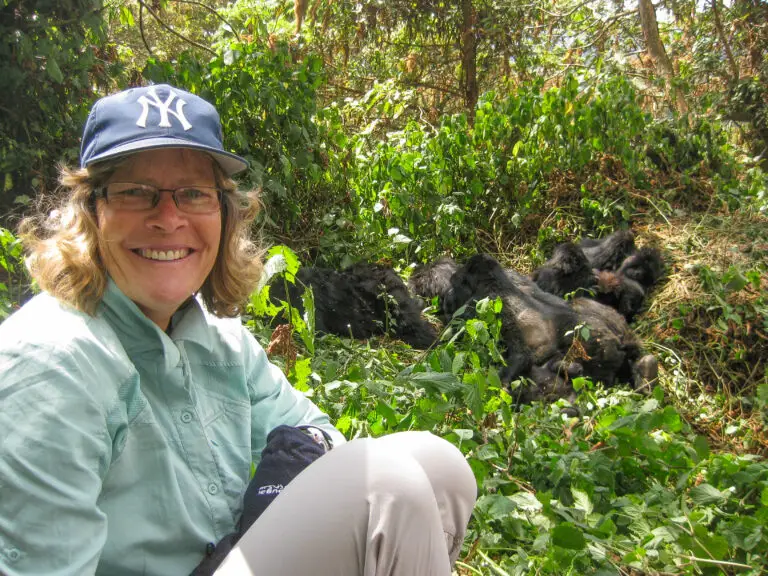
Uganda is often called the primate capital of the world. It’s home to more than half the world’s mountain gorillas, around 5,000 chimpanzees and many other primates, including golden monkeys, black-and-white colobus and bushbabies. Bwindi Impenetrable National Park is our top choice for gorilla trekking, with more habituated families than anywhere else.
To choose where to go, read the best places to see gorillas in the wild. For permits, rules and what to expect, see our gorilla trekking guide.
Need help planning your gorilla trek?
Book a free consultation with one of our African adventure experts today, or browse our gorilla trekking tours in Uganda and Rwanda.