Mountain Gorilla Facts: How Many Are Left, Where They Live and How They Behave
In short: mountain gorillas are a subspecies of eastern gorilla that live only in two areas of central Africa: the Virunga volcanoes shared by Rwanda, Uganda and the DR Congo, and Bwindi Impenetrable National Park in Uganda. About 1,063 survive in the wild. Thanks to decades of protection, they are one of the very few great apes whose numbers are rising.
Mountain gorilla quick facts
| Scientific name | Gorilla beringei beringei |
|---|---|
| Population | About 1,063 in the wild |
| Conservation status | Endangered (IUCN Red List, upgraded from Critically Endangered in 2018) |
| Where they live | Virunga Massif (Rwanda, Uganda, DR Congo) and Bwindi Impenetrable National Park (Uganda) |
| Habitat | Montane and bamboo forest, roughly 2,200 to 4,300 metres above sea level in the Virungas, and lower in Bwindi |
| Weight | Adult males up to about 200 kg, females about half that |
| Diet | Mainly leaves, stems, shoots and roots, plus some fruit and insects |
| Lifespan | About 35 to 40 years in the wild |
How many mountain gorillas are left?
The most recent counts found 604 mountain gorillas in the Virunga Massif (2016) and 459 in Bwindi and the neighbouring Sarambwe reserve (2018), a total of about 1,063. That is a remarkable recovery. In the early 1980s, when Dian Fossey was working in Rwanda, only around 250 remained in the Virungas.
The recovery is the result of daily ranger patrols, veterinary care from organisations such as Gorilla Doctors, and tourism. Gorilla permit fees pay for protection and give local communities a share of the income, so living gorillas are worth far more to people than poaching or clearing their forest. You can read more in our history of gorilla trekking.
Where do mountain gorillas live?
Mountain gorillas live in just four national parks in three countries:
- Volcanoes National Park, Rwanda on the slopes of the Virunga volcanoes
- Bwindi Impenetrable National Park, Uganda, a steep ancient rainforest home to almost half the population
- Mgahinga Gorilla National Park, Uganda, the smallest, with one habituated family
- Virunga National Park, DR Congo, Africa’s oldest national park
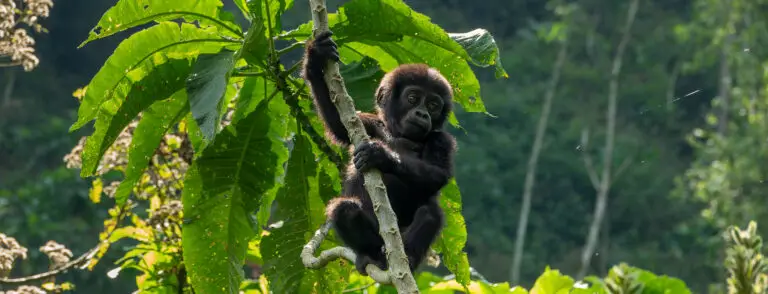
They are different from the eastern lowland (Grauer’s) gorillas of the eastern DR Congo and the western lowland gorillas of central and west Africa, which are the gorillas usually seen in zoos. Mountain gorillas have longer, thicker fur to cope with the cold at altitude.
How gorilla families work
Mountain gorillas live in family groups that usually number about 10 animals, though some have more than 30. Each group is led by a dominant adult male, called a silverback after the silver saddle of hair that develops on his back from about 12 years old. He decides where the group travels, settles disputes and defends the family.
A group usually includes several adult females, their young and sometimes younger males. Females give birth to a single baby after a pregnancy of about eight and a half months, and usually only every four years or so, which is why populations recover slowly. Young gorillas ride on their mothers’ backs and stay close to them for several years.
What do mountain gorillas eat?
Mountain gorillas are mostly vegetarian. They eat leaves, stems, pith, shoots and roots from more than 100 plant species, with bamboo shoots a favourite in season. In Bwindi they eat more fruit. An adult male can eat around 30 kg of vegetation a day, and gorillas spend much of the day feeding and resting. They get almost all the water they need from their food.
Are mountain gorillas dangerous?
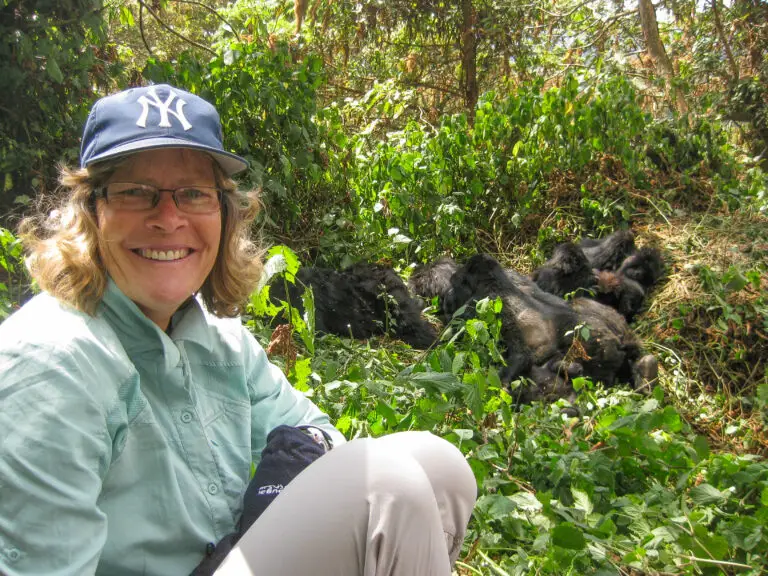
Mountain gorillas are generally calm and peaceful. A silverback may charge or beat his chest if he feels his family is threatened, but this is usually a bluff. The families that visitors meet are habituated, meaning they have been slowly accustomed to people over two years or more. Rangers know each gorilla well and guide visitors on how to behave. Read our guide to whether gorilla trekking is safe.
How to see mountain gorillas
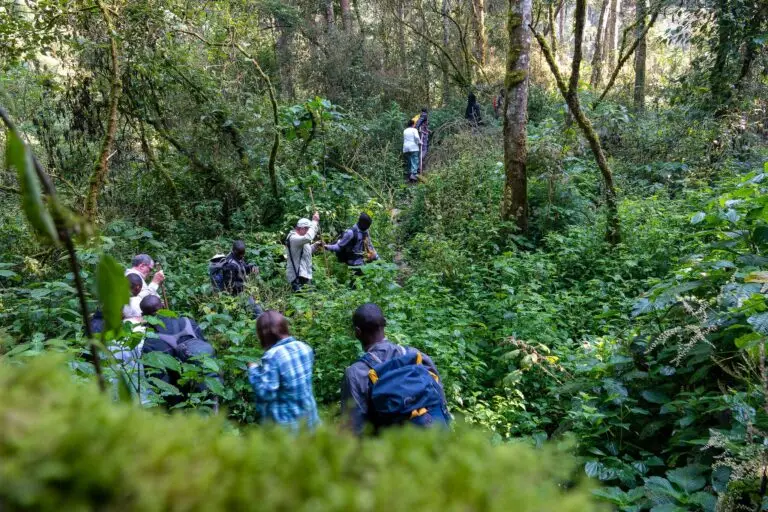
The only way to see mountain gorillas is on a guided trek with a permit. Permits cost US$1,500 in Rwanda and US$800 in Uganda in 2026, and give you one hour with a habituated family. Our gorilla trekking guide explains permits, fitness and what to expect, and our gorilla trekking tours take care of every detail.
Mountain gorilla FAQs
How many mountain gorillas are left in the world?
About 1,063 mountain gorillas live in the wild, according to the most recent censuses in the Virunga Massif (2016) and Bwindi (2018). There are none in zoos.
Are mountain gorillas endangered?
Yes. They are listed as Endangered on the IUCN Red List. They were moved up from Critically Endangered in 2018 because their numbers are growing.
How big is a mountain gorilla?
Adult males (silverbacks) can weigh up to about 200 kg and stand around 1.7 metres tall when upright. Females weigh roughly half as much.
How closely related are gorillas to humans?
Gorillas share around 98% of their DNA with humans. Only chimpanzees and bonobos are more closely related to us.
What is the difference between mountain gorillas and lowland gorillas?
Mountain gorillas live at high altitude in Rwanda, Uganda and the DR Congo, and have longer, thicker fur. Lowland gorillas live in lower forests in central and west Africa and are the gorillas usually seen in zoos.