Best Safari Parks in South Africa: The Ultimate Guide for Every Traveller
Last updated: November 2026
The quick answer: the best safari in South Africa for most first-timers is the Greater Kruger, either Kruger National Park itself or a private reserve next to it such as the Sabi Sand. For a malaria-free safari, choose Madikwe, Pilanesberg or the Eastern Cape reserves near Addo. For wilderness and big skies, it’s the Kgalagadi. The best time to go is the dry winter, May to October.
See how we combine these parks with Cape Town and the Winelands on our South Africa safaris and tours.
Comparing South Africa with other countries? See our pick of the best safari parks in Africa.
Why go on safari in South Africa?
There’s a moment on every South African safari that stops you in your tracks. Maybe it’s a leopard draped across a branch, its tail swaying in the afternoon heat. Maybe it’s a herd of elephants heading to a waterhole at dusk. Or maybe it’s a black-maned Kalahari lion staring at you from a red sand dune at dawn.
South Africa combines incredible wildlife with excellent roads, a huge range of lodges for every budget, easy self-drive options and malaria-free reserves, all a short flight from Cape Town or Johannesburg. It’s one of the easiest places in Africa for a first safari, and one of the best for families.
With so many options, where should you go? It depends on the kind of traveller you are. This guide breaks down the best safari parks in South Africa by what matters most to you: wildlife, budget, families, luxury, photography or getting far from the crowds.
The Best Safari Parks in South Africa at a Glance
| Park | Best For | Big Five | Malaria-Free | Self-Drive | What Makes It Special |
|---|---|---|---|---|---|
| Kruger National Park | Budget & first-time safari | ✅ | ⚠️ | ✅ | Huge, diverse and incredibly accessible |
| Sabi Sands | Luxury & leopards | ✅ | ⚠️ | ❌ | Exceptional leopard sightings and luxury lodges |
| Addo Elephant National Park | Families & elephants | ✅ | ✅ | ✅ | Malaria-free and easy to explore independently |
| Hluhluwe-Imfolozi | Rhino & conservation | ✅ | ⚠️ | ✅ | Historic role in southern white rhino conservation |
| Madikwe Game Reserve | Families & exclusivity | ✅ | ✅ | ❌ | Quiet Big Five safaris and excellent wild dog sightings |
| Kgalagadi Transfrontier Park | Adventure & wilderness | Partial | ✅ | ✅ | Red dunes, desert-adapted wildlife and huge open spaces |
| Pilanesberg National Park | Short safari breaks | ✅ | ✅ | ✅ | Conveniently located for trips from Johannesburg |
1. Kruger National Park: Africa’s Most Accessible Big Five Safari
If South Africa has a safari heartland, it’s Kruger.
Stretching around 350 kilometres from north to south across Limpopo and Mpumalanga provinces, Kruger National Park covers nearly 20,000 square kilometres, roughly the size of Israel. Wildlife has been protected here since 1898, and the area was officially proclaimed a national park in 1926.
The numbers are impressive: 147 mammal species, more than 517 bird species, an estimated 17,000 to 20,000 elephants, 1,600 to 2,000 lions, more than 10,000 white rhinos, and tens of thousands of buffalo. All of the Big Five are here, and with enough time in the park, your chances of seeing them are excellent.
What really sets Kruger apart, though, is its self-drive accessibility.
With around 2,500 kilometres of tarred and gravel roads and 22 rest camps ranging from basic campsites to comfortable self-catering chalets, Kruger gives you the freedom to explore at your own pace. You can rent a car, drive through the park yourself, and spend days searching for lions, leopards, elephants and everything in between.
For travellers watching their budget, this is a huge advantage. Conservation fees and affordable SANParks accommodation make Kruger one of the most accessible ways to experience a Big Five safari.
Best time to visit: May to September. For July and August, book accommodation well in advance.
2. Sabi Sands Game Reserve: The World’s Best Leopard Safari
If you have one safari stop in South Africa and a generous budget, Sabi Sands is hard to ignore.
Rated #4 in Africa by SafariBookings with a score of 4.71/5, this 65,000-hectare private reserve in the southwestern corner of the Greater Kruger area shares an unfenced border with Kruger National Park. Wildlife can therefore move freely between the two areas.
Sabi Sands has been privately conserved since 1948, and that long history is particularly evident in its famous leopard population.
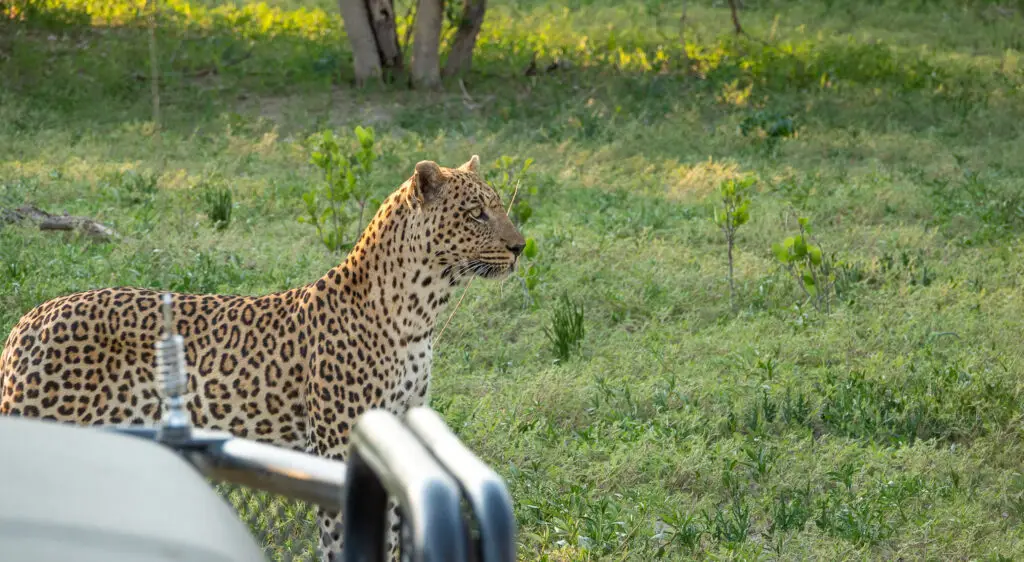
The reserve is renowned for its high concentration of leopards, many of which are remarkably comfortable around safari vehicles. This means guests can sometimes watch these elusive cats hunting, resting or caring for their cubs from just a few metres away.
Some individual leopards have even become famous among guides and photographers, with their identities and family histories tracked over many years.
Best time to visit: May to September for excellent visibility and game viewing. Leopards can be seen throughout the year.
3. Addo Elephant National Park: Africa’s Densest Elephant Population
For families, first-time safari travellers, and anyone who wants a world-class safari without the malaria risk, Addo Elephant National Park in the Eastern Cape is an excellent choice.
Established in 1931 to protect just 11 surviving elephants, Addo has grown into a vast conservation area supporting hundreds of elephants across more than 170,000 hectares.
And elephants really are the stars here.
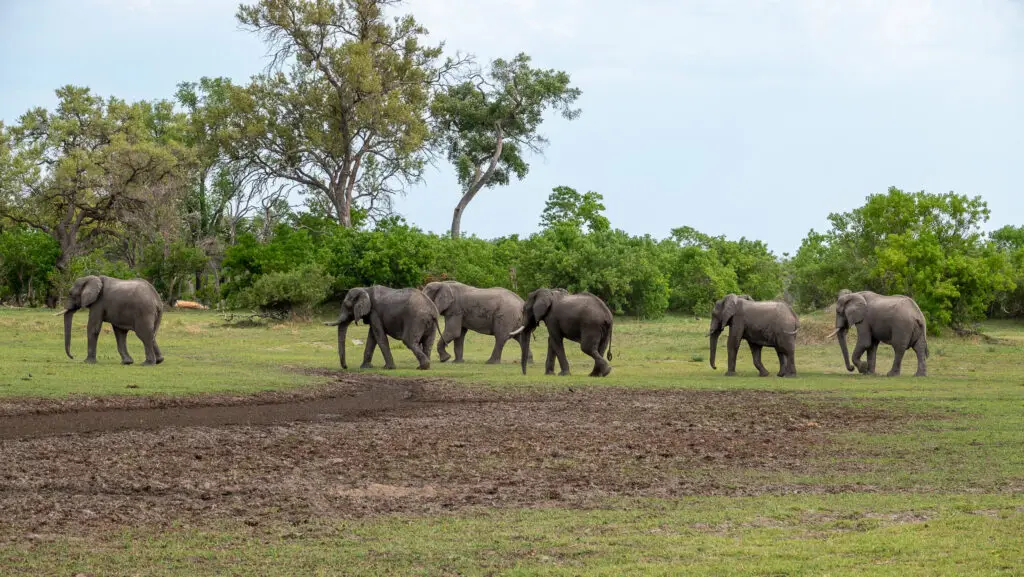
Watching a large herd gather around a waterhole, especially at sunset, can be an unforgettable experience. Because Addo is self-drive friendly, you can sometimes find yourself watching these enormous animals from the safety of your own vehicle with nobody else around.
But Addo is about much more than elephants.
The park is associated with the “Big 7”, a tourism concept that adds southern right whales and great white sharks to the traditional Big Five. The wider Addo conservation area also contains several different habitats and supports more than 400 bird species.
One of its biggest advantages for families is that Addo is malaria-free. That makes it particularly appealing to travellers with young children who would rather avoid the additional considerations that come with visiting malaria areas.
Best time to visit: April to September. Elephants are present throughout the year.
4. Hluhluwe-Imfolozi Park: Where the White Rhino Was Saved
Long before Kruger became South Africa’s best-known safari destination, there was Hluhluwe-Imfolozi.
Established in 1895, it is one of Africa’s oldest proclaimed nature reserves and has played an extraordinary role in wildlife conservation.
The park is particularly famous for its contribution to southern white rhino conservation. By the late 19th century, hunting had reduced the population to just a small number of surviving animals. Protection efforts here, followed by the landmark Operation Rhino programme in the 1960s, helped transform the future of the species.
Thousands of white rhinos were subsequently relocated to other parts of southern Africa, helping establish populations far beyond the original reserve.
Today, Hluhluwe-Imfolozi remains one of the most important places to see southern white rhinos in the wild.
And there’s plenty more to see.
The park is home to the Big Five, along with cheetahs, African wild dogs, hippos, crocodiles and more than 300 bird species. Visitors can explore on guided game drives, self-drive safaris and, in selected areas and with operators, walking experiences and night drives.
Best time to visit: March to November. May to September generally offers the clearest visibility.
5. Madikwe Game Reserve: South Africa’s Best-Kept Secret
Madikwe doesn’t always get the same attention as Kruger or Sabi Sands, but spend some time talking to safari travellers and you’ll quickly hear its name come up.
Rated #20 in Africa by SafariBookings, this 75,000-hectare reserve on the Botswana border in North West Province is one of South Africa’s leading malaria-free Big Five destinations.
The story behind Madikwe is remarkable.
Before 1991, much of this land was used as cattle farmland and had become heavily degraded. Then came Operation Phoenix, one of the largest wildlife translocation projects ever undertaken.
Over six years, more than 8,000 animals representing 27 species were relocated into the reserve. The project included elephants, both rhino species and African wild dogs.
Today, Madikwe supports thousands of animals and has become one of the better places in South Africa to look for African wild dogs.
There are no normal day visitors, which helps create a quieter and more exclusive safari experience. More than 20 lodges operate within the reserve, ranging from comfortable camps to high-end safari properties.
The landscape is another attraction. Open savanna, rocky hills and the Dwarsberg Mountains create a setting that feels very different from Kruger.
For families with young children, pregnant travellers, or anyone who prefers a malaria-free safari, Madikwe is particularly appealing.
Best time to visit: May to September. May and September can offer a good balance between wildlife viewing and lodge rates.
6. Kgalagadi Transfrontier Park: Africa’s Desert Wilderness
For travellers who want something genuinely different, raw, remote and visually unlike the classic safari landscape, Kgalagadi Transfrontier Park is in a category of its own.
Spanning nearly 38,000 square kilometres across South Africa’s Northern Cape and Botswana, Kgalagadi is almost twice the size of Kruger.
The landscape is dominated by red sand dunes, dry riverbeds and enormous open skies. The name Kgalagadi is often translated as “place of thirst”, a fitting description for this harsh but spectacular environment.
The park’s most famous residents are its black-maned Kalahari lions.
The cold desert environment is thought to contribute to the particularly impressive manes seen on some males. Seeing one of these lions resting near a waterhole at sunrise is one of those safari moments that is difficult to forget.
Cheetahs are often spotted on the open dune crests, while leopards move through the dry riverbeds. Gemsbok, also known as oryx, are another signature sight, their long horns standing out against the red sand.
Kgalagadi is malaria-free and well suited to self-drive travellers. A 4×4 is strongly recommended for some of the more remote routes, however.
The wilderness camps are intentionally simple, and some have no electricity or fences. At night, the lack of light pollution makes the stars almost as impressive as the wildlife.
Best time to visit: May to September. Predator sightings are possible throughout the year.
Best time to go on safari in South Africa
May to October is the best time for game viewing in Kruger, the Sabi Sand, Madikwe and Pilanesberg. It’s the dry winter: the bush thins out, animals gather at waterholes, days are sunny and mild, and malaria risk is at its lowest. July to September is the driest and busiest period, so book early.
November to April is the green season. Expect hot days, afternoon storms, lush scenery, newborn animals and superb birding, often with lower lodge rates. The Kgalagadi is extremely hot in summer, so it’s best from March to May or in the cooler winter months. The malaria-free Eastern Cape reserves around Addo are good all year.
For other countries, see our guide to the best time to go on safari.
South Africa safari FAQs
What is the best safari in South Africa?
For most travellers, the Greater Kruger: a private reserve such as the Sabi Sand for the best Big Five and leopard viewing, or Kruger National Park itself for great value and self-drive freedom.
Where can I go on a malaria-free safari in South Africa?
Madikwe Game Reserve and Pilanesberg National Park in the north-west, and the Eastern Cape reserves around Addo Elephant National Park. All have the Big Five or most of them, and suit families with young children.
Is Kruger or a private reserve better?
Kruger is cheaper and lets you self-drive, but you must stay on roads and share sightings. Private reserves like the Sabi Sand cost more but include guided drives in open vehicles, off-road tracking and night drives, which means more and closer sightings.
How many days do you need for a South Africa safari?
Three to four nights in one reserve is ideal for a first safari, which pairs well with a few days in Cape Town and the Winelands. See how long your safari should be.
How much does a South Africa safari cost?
South Africa has options for every budget, from self-drive Kruger stays to luxury private lodges. See our safari cost guide for current prices.
Ready to plan your South Africa safari?
South Africa’s safari landscape is extraordinary in its variety. You can drive yourself through the vast wilderness of Kruger, wake up in a luxury lodge in the Sabi Sand, watch elephants at a waterhole in Addo, track rhinos in Hluhluwe-iMfolozi, or sit beneath an enormous Kalahari sky in the Kgalagadi. Whatever your budget, family situation or wildlife wishlist, there’s a safari here for you.
See our South Africa safaris and tours, compare the best safari lodges in Africa, or read our tips for budget safaris.