About chimpanzees and chimp trekking
Origins of chimpanzee trekking
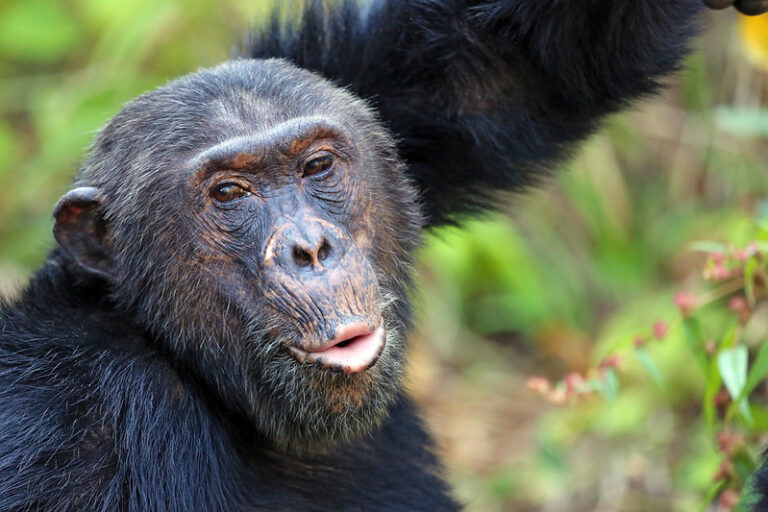
Chimpanzees are one of five species of great apes, inhabiting the savannas and forests of central and west Africa. Chimps are the closest relatives to humans, sharing 98.7% of their DNA with us.
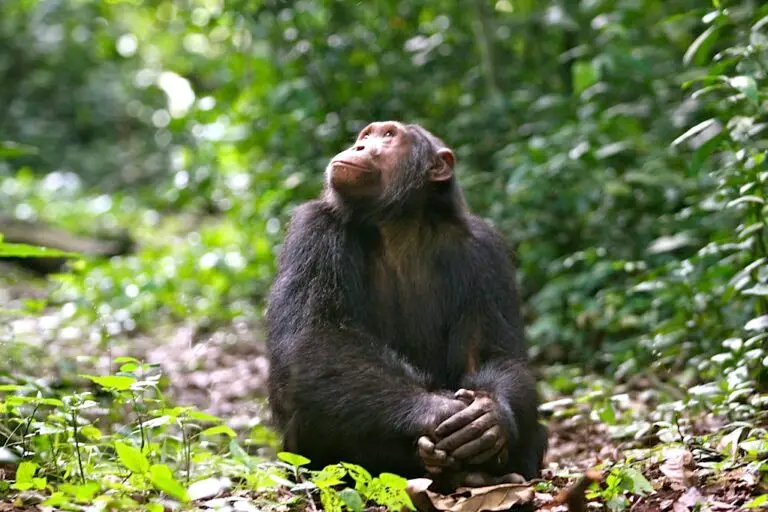
There are four subspecies of chimpanzee, the western chimpanzee, central chimpanzee, eastern chimpanzee and Nigeria-Cameroon chimpanzee. All four subspecies generally live in communities of between 20 and 150 individuals, spread across 21 African countries. Chimps communicate with each other in a variety of ways, including vocalisations, body language, facial expressions and hand-clapping.
Chimp trekking origins
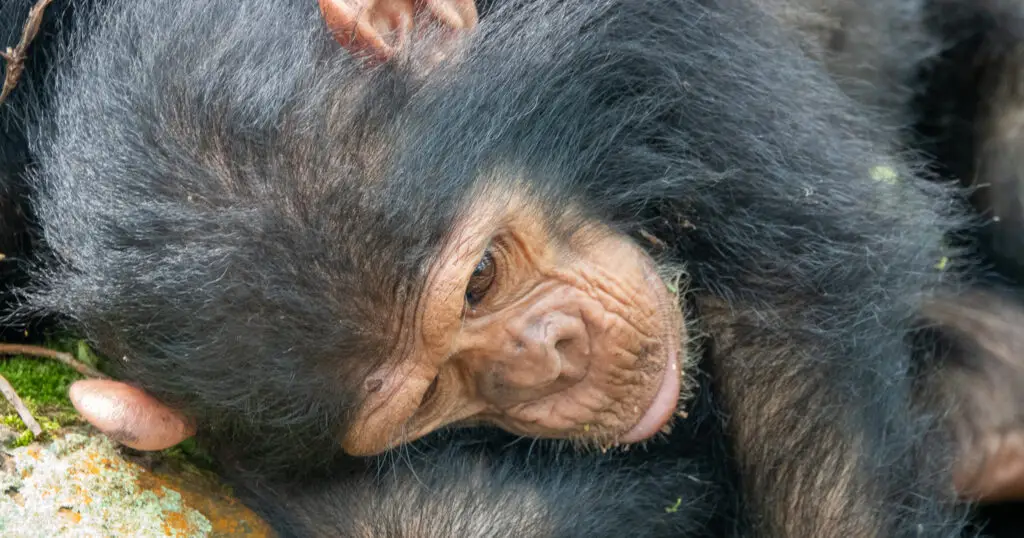
The origins of chimp trekking are not well known, but trekking is believed to date back to the late 1980’s when the Frankfurt Zoological Society funded a chimp habituation program.
Little was known about chimpanzees until Jane Goodall started her ground-breaking research in the 1960’s. At the age of 26, and with no scientific or research background, Goodall headed to the Kakombe Valley in Tanzania’s Gombe Stream National Park, to begin her research. For more than 60 years, Jane Goodall has undertaken groundbreaking work in the protection and understanding of chimpanzees. In the process, redefining best animal conservation practice to include the needs of local people, culture and environments. With Goodall’s work came the establishment of Gombe Stream Research Center in 1967, and the establishment of the Gombe Stream National Park the following year. To this day, the research facility and the national park are one of the most best locations for chimp trekking, and Goodall’s findings continue to play a monumental role in the knowledge and experiences we can take from our primitive relatives today.
Chimp threats
All four subspecies of chimpanzee are threatened with extinction, with an estimated total population of 150,000 to 250,000 in the wild.
Chimp populations across Africa are rapidly declining due to poaching, habitat destruction and disease. Populations are no longer found in Gambia, Burkina Faso, Benin or Togo. Deforestation for timber harvesting, palm oil plantations and mining is not only decreasing the space chimp populations have to build their homes, but is also exposing chimps to an increased threat from poachers. The increasing commercialisation of bushmeat, which used to be a subsistence only, and minimal law enforcement have decimated chimp populations. Chimp populations are also susceptible to many of the same diseases as humans, but often lack an effective immune response to these illnesses, rendering even human colds and flus potentially fatal. The ebola crisis also wrought havoc on chimpanzee communities in western Africa in 2013 – 2015.
The importance of chimp tourism in conservation efforts
Chimp trekking plays a vital role in chimp conservation. Not only are treks highly regulated to protect the chimps from outside illnesses, but the money you pay for your permit is contributing to future research and the employment of park rangers to protect and track chimpanzee populations. The money tourists spend also contributes to the empowerment of local communities through job creating, economic stimulation and the conservation of local cultures. See our impact travel guide for more.
Best places to trek with chimps
The best and safest places to trek with chimps are:
- Tanzania (Gombe & Mahale)
- Uganda (Kibale, Kyambura and Budongo)
- Rwanda (Nyungwe)
All of these countires are located in Eastern Africa and offer fantastic opportunties to see the eastern chimpanzee. This also makes it easy to pair your chimp trek with:
- Safari
- Kilimanjaro
- Gorillas
- Zanzibar, or
- One of the other unforgettable adventures available in East Africa.
Sierra Leone, Cameroon and Gabon also offer fantastic off-the-beaten-track chimp experiences, particularly if you want an intimate experience without many other tourists. Many of the other countries were chimps live are currently unsafe, or chimpanzee trekking is not well established for tourists.
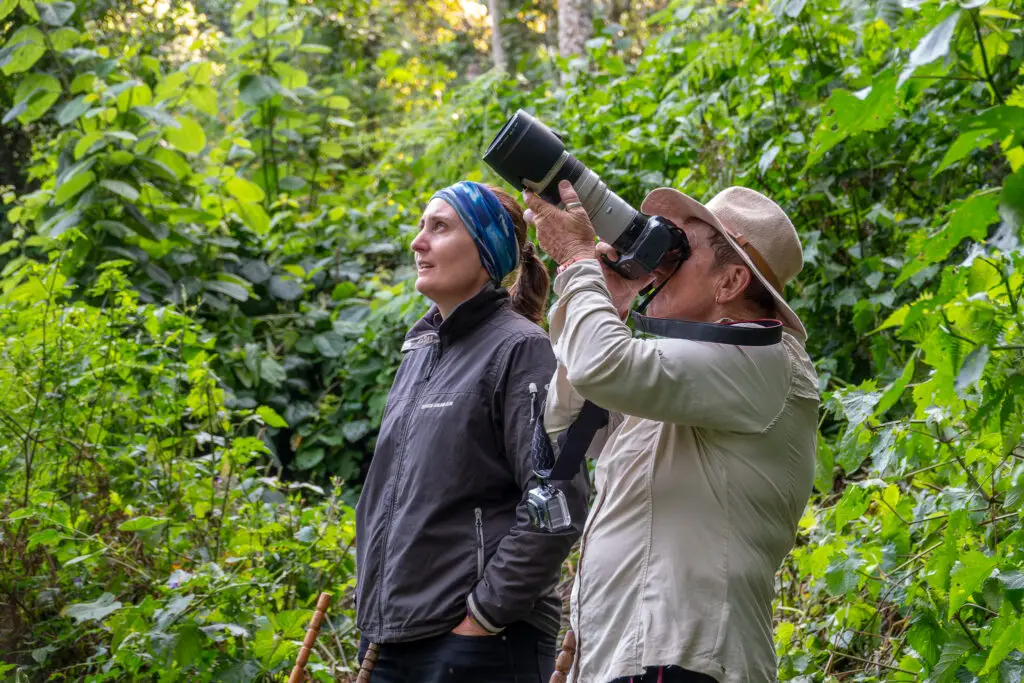
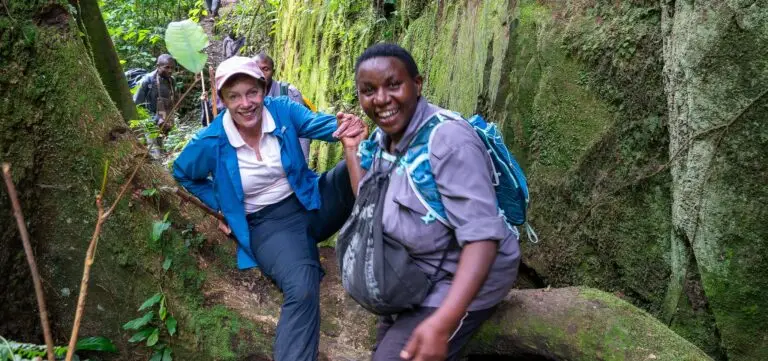
On a chimp trek, you will be taken on a wild experience through native forests to see chimpanzees in their natural habitat. Treks are generally guided by local rangers, trackers, guides and sometimes researchers, who will be able to track and locate chimp communities so that you can watch them for a couple of hours. Chimp trekking allows us to peek into the familiar world of these creatures and marvel at how alike we really are. As humans, we share many of the same natural instincts and motives as chimp communities, from social hierarchies to the complexities of emotions and intelligence. When getting a glimpse of chimps in their natural habitat, one is truly forced to question what it means to be human, as well as wonder how close we remain to the natural world, something that can easily be forgotten in the hustle and bustle of daily life. You can’t help but be entertained by the chimps’ energetic personalities as they swing from the canopies.
To find out more about how you can trek with chimps visit our ‘Ultimate Guide to Trekking with Gorillas and Chimps’.