Gombe National Park: The Complete Guide to Jane Goodall’s Chimps
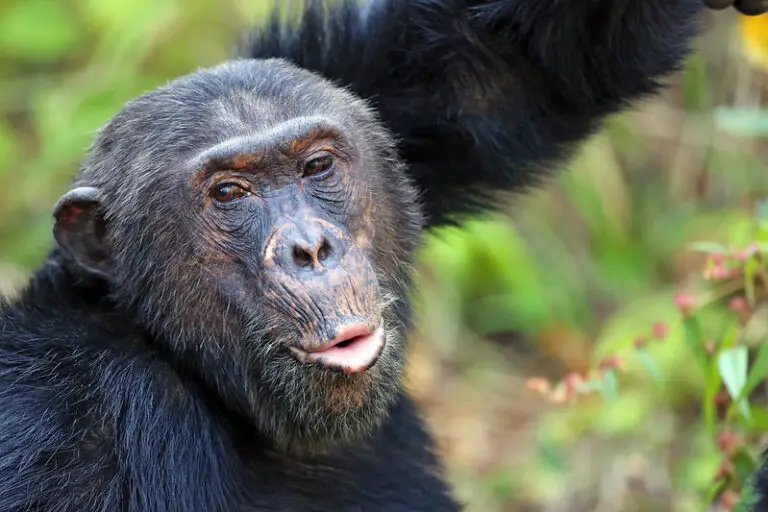
Gombe National Park (also called Gombe Stream National Park) is a narrow strip of steep forested valleys on the shore of Lake Tanganyika in western Tanzania. It is where Jane Goodall began studying wild chimpanzees in 1960, and it is still home to the longest-running chimpanzee research project in the world. Today you can walk the same forest trails with a ranger and spend an hour with the chimps she made famous.
Gombe is remote, small and quiet: there are no roads into the park, so every visit starts with a boat ride up the lake. That is a big part of its magic. This guide covers how to get there, park fees, where to stay, what a chimp trek is like, the best time to go and Gombe's history. If you would rather we plan it for you, see our 5 Day Gombe Chimpanzee Trek.
Gombe at a glance
- Where: about 16km north of Kigoma, on the eastern shore of Lake Tanganyika, western Tanzania
- Size: about 35km² of land, making it Tanzania's smallest national park
- Chimps: around 90 chimpanzees in three communities: Kasekela, Mitumba and Kalande
- Protected since: a game reserve from 1943, and a national park since 1968
- Getting there: fly to Kigoma, then take a boat to the park
- Best time: June to October (dry season)
- Minimum age for chimp trekking: 15
How to get to Gombe National Park
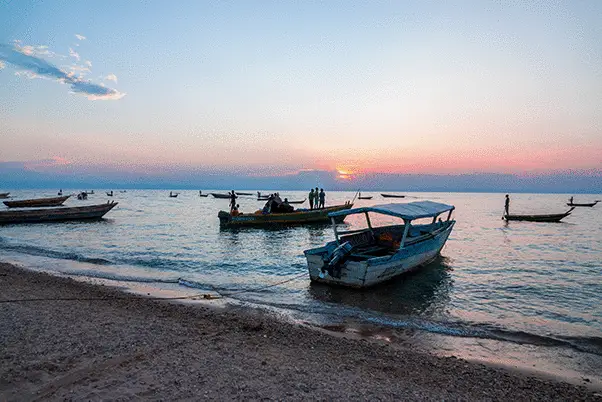
Gombe sits on the shore of Lake Tanganyika, the longest freshwater lake in the world and the second deepest. There are no roads into the park, so the only way in is by boat.
1. Fly to Kigoma. Most travellers fly to Kigoma from Dar es Salaam, often after a safari or before a few days in Zanzibar. Kigoma is also linked by road and rail to the rest of Tanzania, but the journey is long.
2. Take a boat to Gombe. From Kigoma it is roughly 1.5 to 3 hours up the lake, depending on the boat. Private boats are faster and more comfortable than the local lake taxis, and the views of fishing villages and the forested escarpment are part of the experience.
We usually include a night in Kigoma on the way in or out, so you are not racing a flight. On our Gombe chimpanzee trek, flights, boat transfers and park fees are all arranged for you.
Gombe park fees and chimp trekking permits
Gombe is one of Tanzania's premium primate parks. The entry fee covers 24 hours in the park and includes your guided chimp trek, so there is no separate permit to book.
- Park entry (non-residents aged 16+): about US$100 plus 18% VAT, or around US$118 per person per 24 hours
- Payment: Tanzanian parks now take card or electronic payments only, not cash at the gate
- Boat transfers, guide tips and accommodation are extra
Most visitors spend two nights so they can trek twice, which means paying two days of park fees. Fees are set by Tanzania National Parks (TANAPA) and change from time to time, so we confirm the current rate in your quote.
Where to stay in Gombe National Park
Fewer than 2,000 people visit Gombe each year, so accommodation is limited and it pays to book early, especially from June to October. There are three main options.
Mbali Mbali Gombe Lodge (luxury, inside the park)
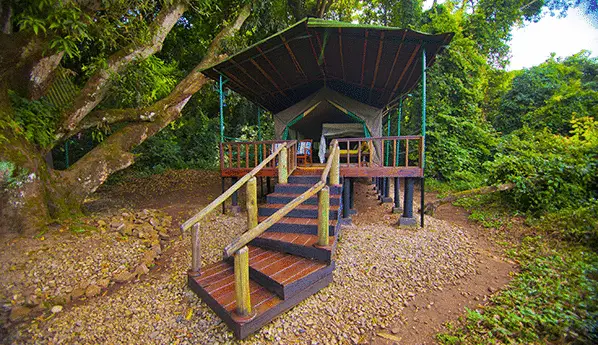
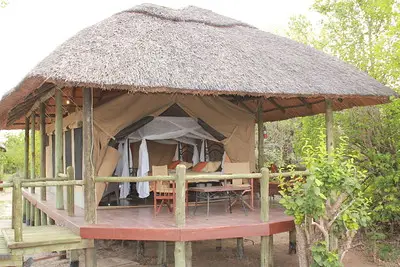
The only lodge inside the park, Mbali Mbali Gombe (formerly Gombe Forest Lodge) has seven tents on raised timber platforms beneath huge mango trees on the lakeshore, for a maximum of 14 guests. Rates are usually all-inclusive packages covering meals, drinks, activities and transfers, from roughly US$525 to US$580 per person per night in 2026. The lodge usually closes for the long rains (around March to May).
Gombe National Park bandas (mid-range, at the park headquarters)
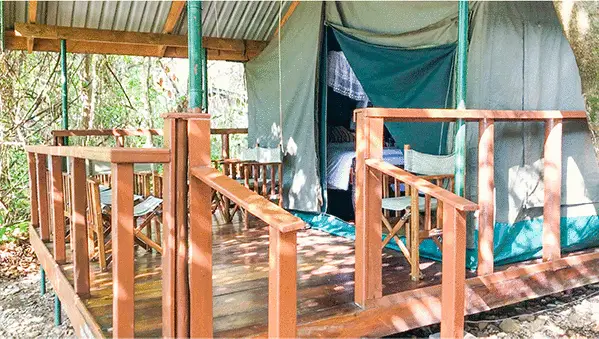
On a long sandy beach near the park headquarters sit a small number of lakefront bandas. Each has a large bed, a private toilet and shower, and its own veranda. They are simpler than Mbali Mbali but more than comfortable, with a cook preparing tasty local dishes (approx. US$100 per person per night, meals included). This is where we usually stay on our Gombe trips.
Kigoma hotels
Kigoma Hilltop Hotel, high above the lake, is a good base for the night before or after Gombe. The park also has a basic TANAPA rest house with simple hostel-style rooms for travellers on a tight budget (approx. US$25 per person per night, self-catering).
Chimp trekking in Gombe
What a chimp trek in Gombe is like
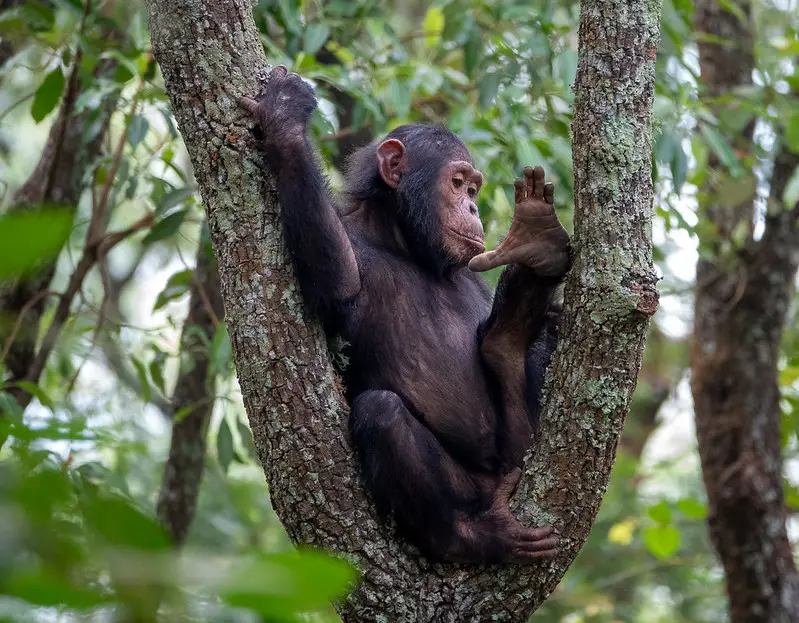
Treks start early. A ranger and trackers lead you into the forest along steep, stream-cut valleys, listening for pant-hoots and checking where the chimps nested the night before. Depending on where the community is, you might walk 30 minutes or several hours: allow 2 to 6 hours in total. Once you reach the chimps, you get up to an hour with them, watching them groom, feed, play and squabble a few metres above or beside you, just as Jane Goodall did.
The trails are steep and can be slippery, and you may need to leave the path if the chimps are on the move. You do not need to be an athlete, but you should be comfortable walking for a few hours on uneven ground. You will have your own guide, so you can set the pace.
Chimp trekking rules in Gombe
- Minimum age is 15 (set by TANAPA)
- Groups of up to 6 people, with a maximum of one hour with the chimps
- Keep at least 10 metres from the chimps, and wear a face mask when you are close
- No eating, drinking or flash photography near the chimps
- Don't trek if you are unwell: chimps can catch human colds and flu
For what to bring, see our packing list for gorilla and chimp trekking, and for more on trekking with chimps across East Africa, see our chimpanzee trekking page.
The other wildlife
You can also expect to see other primates on your trek, including beachcombing olive baboons, red colobus, red-tailed monkeys, blue monkeys and vervet monkeys. Gombe is one of the few places in the world where red-tailed and blue monkeys hybridise, so keep an eye out for these rare crossbreeds. Over 200 bird species have been recorded in the park.
Waterfalls and forest walks
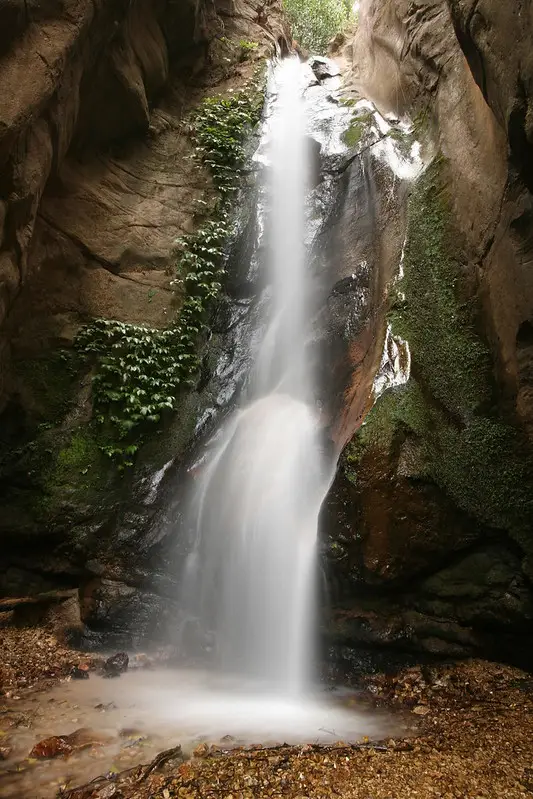
Besides the wildlife, the treks themselves are stunning. Look out for wild waterfalls, such as Kakombe Falls, and lookouts over Lake Tanganyika, including Jane's Peak, where Jane Goodall watched the chimps through her binoculars.
Swimming, kayaking and the lake
Lake Tanganyika's clear water is perfect after a hot trek. Depending on where you stay, you can swim, kayak, snorkel, fish or take a sunset boat trip past the fishing villages. Birdwatching and quiet forest walks with a guide fill the rest of the day.
Best time to visit Gombe National Park
Gombe is open all year, but the dry season from June to October is the most popular time to visit. The trails are drier and less slippery, and the lakeshore is at its most beautiful.
In the wetter months (roughly November to May), the chimps often come lower down the valleys to feed, so they can be quicker to reach. The trade-off is muddy trails, afternoon storms and, during the long rains around March to May, the main lodge closing. December to February can be a good middle ground. Whenever you go, pack a rain jacket: Gombe is a forest.
Gombe's history: Jane Goodall and the chimps
In July 1960, a 26-year-old Jane Goodall arrived at what was then the Gombe Stream Game Reserve with no university degree, a tent and a pair of binoculars. Her patient observations changed how we understand our closest living relatives. At Gombe she saw chimps making and using tools to fish for termites, hunting and eating meat, and forming close family bonds and complex societies with individual personalities.
Her work drew worldwide attention, and Gombe became a national park in 1968. The Gombe Stream Research Center, founded in 1967, still follows the Kasekela, Mitumba and Kalande communities today, making it the longest-running study of wild chimpanzees anywhere. Jane Goodall died in October 2025 at the age of 91, and the Jane Goodall Institute she founded in 1977 continues her work at Gombe and around the world.
Gombe is small, and its chimp population is isolated and vulnerable to disease and habitat loss outside the park. Responsible tourism helps protect it: park fees fund rangers and research, and visiting in small groups with strict health rules keeps the chimps safe.
From the pant-hoots echoing through the valleys to sitting a few metres from an animal that shares about 98% of our DNA, Gombe is our all-time favourite Tanzanian experience, and one you will remember for the rest of your life.
Gombe National Park FAQs
Is Gombe National Park worth visiting?
Yes, if you want an intimate, uncrowded chimp encounter in a remote setting. Gombe is where modern chimpanzee research began, and with only a handful of visitors a day you will often have the chimps to yourself.
How many chimpanzees live in Gombe?
Around 90, split between three communities: Kasekela in the centre, Mitumba in the north and Kalande in the south.
How long should I stay?
We recommend two nights in the park. That gives you two treks, which allows for a day when the chimps are hard to reach, plus time to swim and explore. Allow a night in Kigoma on either side.
How much does it cost to visit Gombe?
Park entry is about US$118 per person per 24 hours, including VAT. A complete trip with flights from Dar es Salaam, boat transfers, park fees and accommodation starts from about US$1,800 per person. See our 5 Day Gombe Chimpanzee Trek for current prices.
Can I combine Gombe with a safari or the beach?
Yes. Gombe pairs well with a Serengeti safari, Mahale Mountains or a few days in Zanzibar. See our Tanzania safaris for ideas, or compare Gombe with Uganda and Rwanda in our guide to the best places to see chimps in the wild.