Chimpanzee Tracking Safaris
Experience The Thrill Of Tracking Chimpanzees Through The Primeval Forests In East Africa
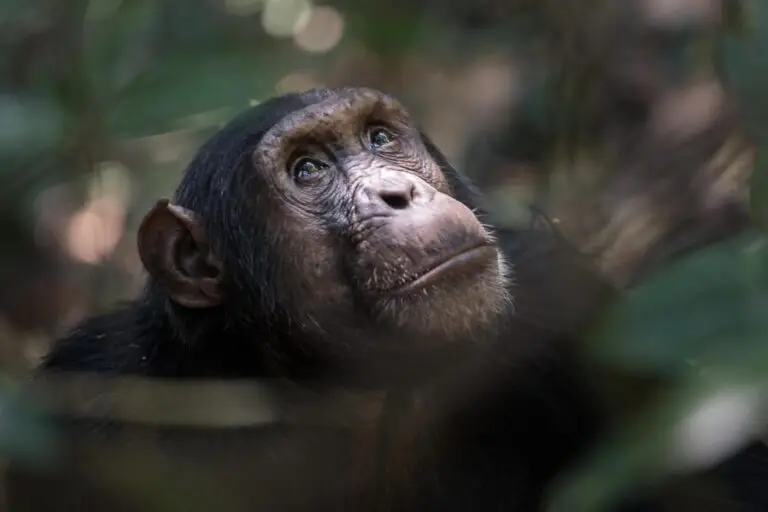
Chimpanzee trekking in Tanzania, Rwanda and Uganda is one of the most immersive wildlife experiences in Africa, offering the chance to observe wild chimps up close in their natural habitat.
Uganda’s Kibale Forest National Park, Rwanda’s Nyungwe National Park and Tanzania’s Mahale Mountains and Gombe Stream National Parks are home to some of the best habituated chimpanzee populations in Africa. These protected forests provide ideal conditions for year-round trekking, combining expert guides, rich biodiversity, and unforgettable primate encounters in three of East Africa’s top safari destinations.
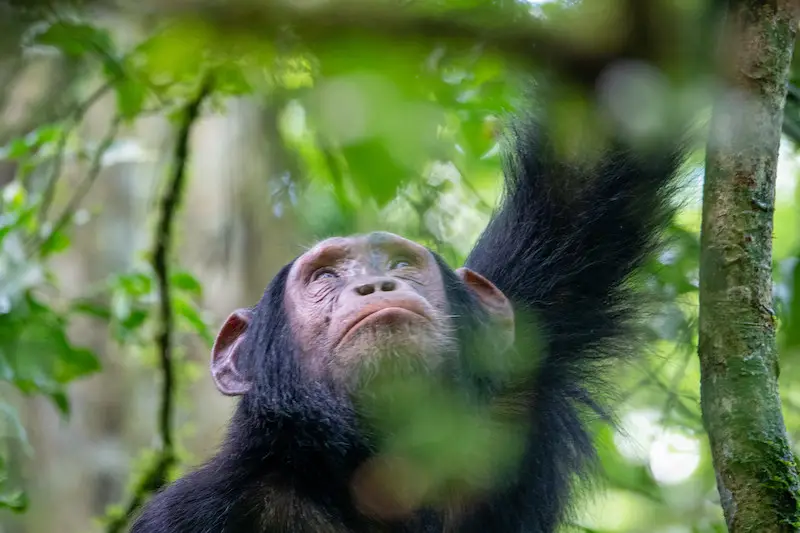
Best places to do Chimpanzee trekking
Highlights
- Trek with wild chimpanzees in Kibale Forest National Park in Uganda, Mahale Mountains and Gombe Stream National Park in Tanzania, or Nyungwe in Rwanda
- Experience the rich cultures of Uganda, Rwanda and Tanzania as you travel
- Explore lush rainforest ecosystems teeming with primates and birdlife
- Relax in comfort at remote forest lodges or lakeside camps
- Environmentally sustainable, low-impact trekking experiences
Travel with purpose
50% of our profits support conservation and community initiatives, helping protect chimpanzees and their habitats while creating meaningful benefits for local communities
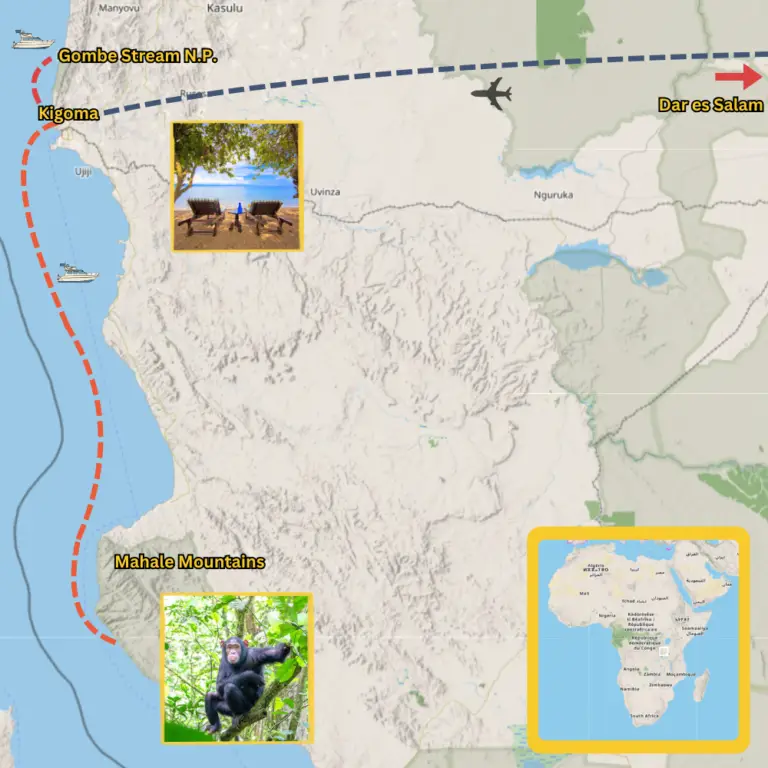
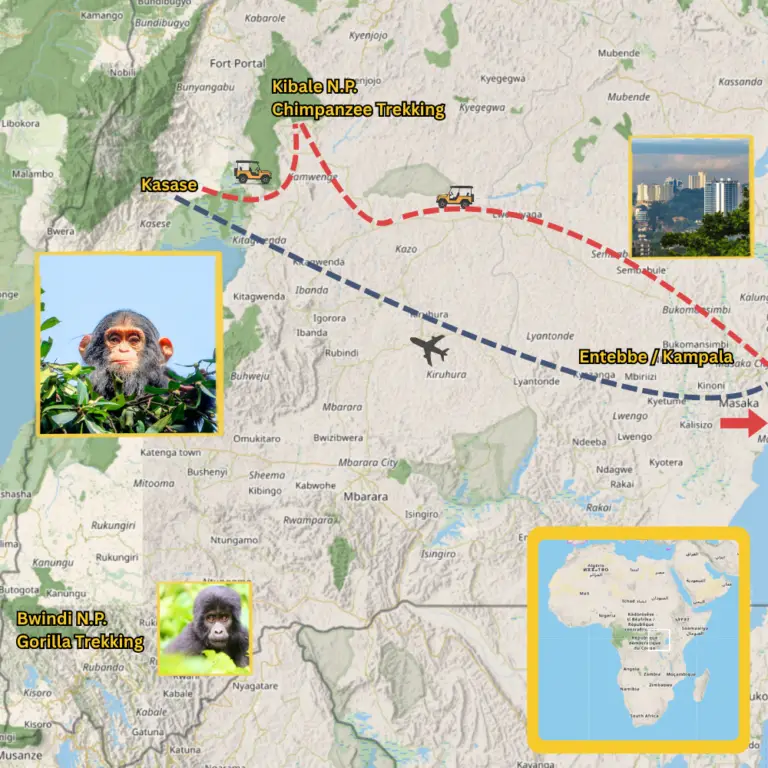
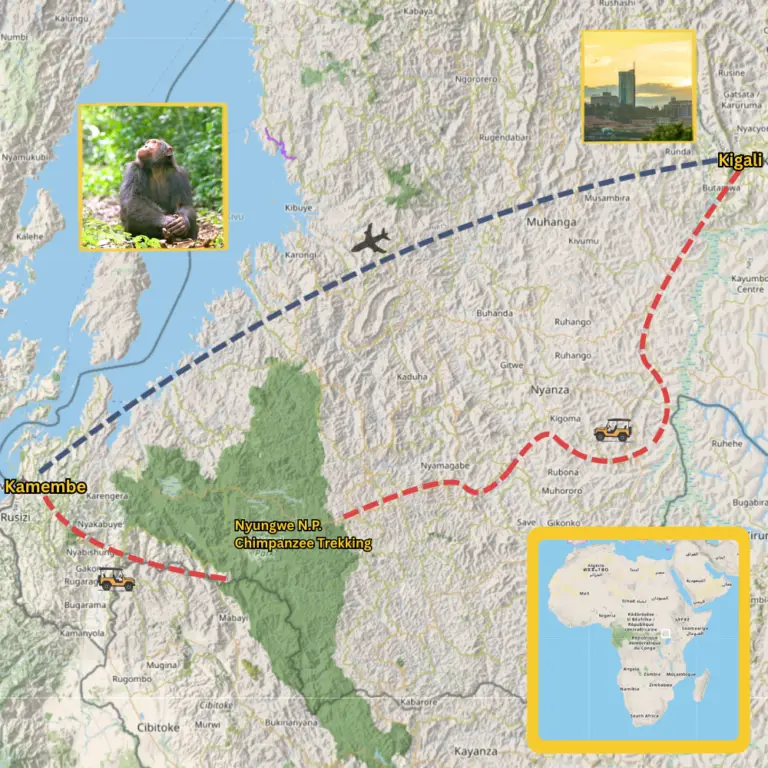
In a remote area of western Tanzania you’ll find Africa’s best chimpanzee trekking experiences and Mahale & Gombe.
Mahale Mountains National Park feels less like a wildlife excursion and more like a quiet act of discovery. Reached only by boat across the deep blue of Lake Tanganyika, Mahale’s forested slopes rise steep and green, alive with birdsongs and the rustle of unseen movement. Tracking chimpanzees here means hours of hiking beneath a dense canopy, guided by distant calls, until suddenly you’re among them, watching a mother groom her young or a dominant male assert his presence with startling intensity. It’s intimate, and unscripted. The perfect adventure.
Further north, Gombe Stream National Park, famous as the place where Dame Jane Goodall started her primate research in the 1960’s, offers a more storied and slightly more accessible encounter. This is where Jane Goodall first redefined our understanding of chimpanzees, and that legacy lingers in every trail. The forest is smaller, the hikes often shorter, but the experience is just as raw, standing a few meters from a troop as they feed, play, and navigate their complex social world. With the lake shimmering just beyond the trees, Gombe blends science, history, and wilderness into something quietly unforgettable.
Not ready to book? Make a no obligation enquiry
Trek with Chimpanzees in Kibale, Uganda
In Kibale, the forest feels close the moment you step off the trailhead—humid, earthy, and threaded with birdsongs and the distant thump of colobus in the canopy. You walk in single file behind the ranger, ducking under vines and brushing past broad leaves still wet from the morning, until a sudden volley of pant-hoots rolls through the trees and everyone stops at once.
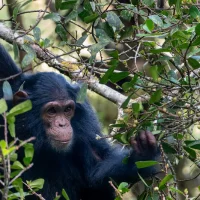
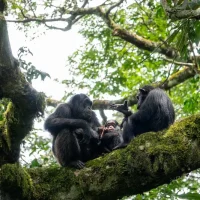
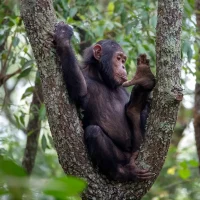
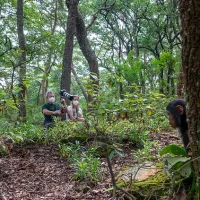
When you see the chimps, it’s not staged or tidy: one sprawls in the fork of a fig tree, another drums on a trunk, youngsters tangle and tumble in a blur of black fur. For an hour you just stand there, mask on, watching their lives unfold a few meters away.
Make a no obligation enquiry if you're not ready to book yet
Chimpanzee trekking safaris in Nyungwe, Rwanda
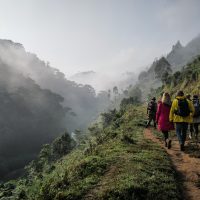
Nyungwe’s chimps pull you into the forest long before you see them. You leave Gisakura or Uwinka in the half-light, boots slipping a little on steep, red-mud trails as mist hangs low between the trees. The forest feels ancient, ferns at your knees, giant trunks beaded with moisture, the calls of colobus and distant birds echoing through the valleys.
When the chimps erupt into sound, it comes as a sudden roar of pant-hoots and drumming that seems to rise from every direction at once, and you push through the last tangle of undergrowth to find them feeding, arguing, and vanishing into the green.
Have a question about Chimpanzee Trekking Safaris?
We're here to help!
Chimpanzee trekking packages!
Chimpanzee Trekking Tours Frequently Asked Questions
How much does it cost to do Chimpanzee tracking?
Permits to do chimpanzee tracking are variable across countries.
- Gombe Stream National Park, Tanzania: $140 per person for the day
- Kibale, Uganda: $250 per person for the experiences, increasing to $300 p.p. on January 1st 2027.
- Nyungwe National Park, Rwanda: $100 per person per day
These are the main places that tourists go to experience chimpanzee tracking, but there are others more off the beaten track. Enquire with us to find out more.
How physically demanding is chimpanzee trekking?
Chimpanzee trekking requires a moderate level of fitness, and each trek is different as chimps can move a significant distance each day to find food. Trekking in Kibale is the flattest and easiest, but also the busiest. The trekking in Tanzania & Rwanda is much steeper.
Where are the best places to trek chimpanzees?
Kibale National Park in Uganda is the gold standard, home to approximately 1,500 chimpanzees in an area the size of New York City, with four habituated communities that have been visited almost daily since 1993.
In Tanzania, Gombe National Park holds a special place in the story of chimpanzee conservation and it is our favourite place to trek with chimps. It was here that the legendary Jane Goodall began her groundbreaking research in the 1960’s, transforming our understanding of these remarkable animals. Trekking Gombe’s forest trails feels like following in her footsteps, and the experience carries a weight that goes beyond wildlife viewing.
Mahale National Park in Tanzania and Nyungwe National Park in Rwanda are also wonderful places to see chimps in the wild.
Is it guaranteed that I'll see chimpanzees?
Nothing in the wild is ever guaranteed, but the odds are strongly in your favor. At Kibale National Park, widely regarded as the best destination for chimp trekking, the probability of encountering chimpanzees exceeds 90 percent. Some trekkers locate a group within 40 minutes; others walk for several hours before an encounter. Given chimp permits are cheaper than gorillas, it can be a good idea to buy two chimp permits in case you don’t see chimps on your first trek.
What should I wear and pack?
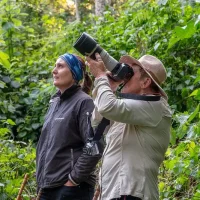
Essentials include water, snacks, a packed lunch, a raincoat, a sun hat, sturdy hiking boots, insect repellent, and your camera with appropriate lenses. Binoculars are particularly valuable once you’re in the canopy-filtered forest light. Long sleeves and long trousers protect against insects and undergrowth. Neutral, earthy colours are preferred
How long does the experience last?
Including a pre-trek orientation, chimpanzee trekking usually runs between two and six hours, and once the chimpanzees are located, you’re given one hour in their company. Because the trek wraps up within a half-day, you’ll have plenty of time for other activities in the afternoon.
What is the best time of year to go?
Chimp trekking is possible year-round, and chimpanzees can be spotted in any season. That said, around 90% of trekkers choose the dry season (Jun – Oct & Jan – Mar), when trails are more comfortable underfoot. Interestingly, the wet season actually increases your chances of a sighting, the abundance of food and water means chimpanzees don’t need to range as far, making them easier to locate.
How close will I get to the chimpanzees?
Guidelines ask that visitors remain at least seven meters, about 23 feet, from the chimpanzees at all times. In practice, chimpanzees are curious and highly mobile, and individuals will often come much closer of their own accord. Your guide will manage these moments calmly and expertly.
Are there health requirements or restrictions?
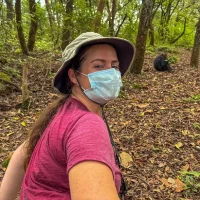
Because chimpanzees share so much of our DNA, they are susceptible to many of the same viruses that affect humans. If you are unwell on the day of your trek, you will not be permitted to enter the forest, a rule taken seriously at every reputable park. Wearing a mask in the presence of the chimps is standard practice. Your trek ranger will brief you fully on health protocols before departure, and any required vaccinations for the region should be discussed with your travel doctor well in advance of departure.
What are the rules I need to follow?
The key rules include: no flash photography, maintaining the required distance from the chimpanzees, no feeding the chimps, and refraining from eating, drinking, smoking, or coughing in their presence.
Can I combine chimpanzee trekking with gorilla trekking on the same trip?
Absolutely! For many travelers, this combination is the centerpiece of an East African journey. You simply need to adjust your safari itinerary to accommodate both, as they require separate permits and are a full day drive, or an expensive domestic flight, apart. Uganda is the ideal base for doing both, with gorilla trekking in Bwindi Impenetrable Forest and chimp trekking at Kibale or Kyambura Gorge often paired on the same itinerary.